
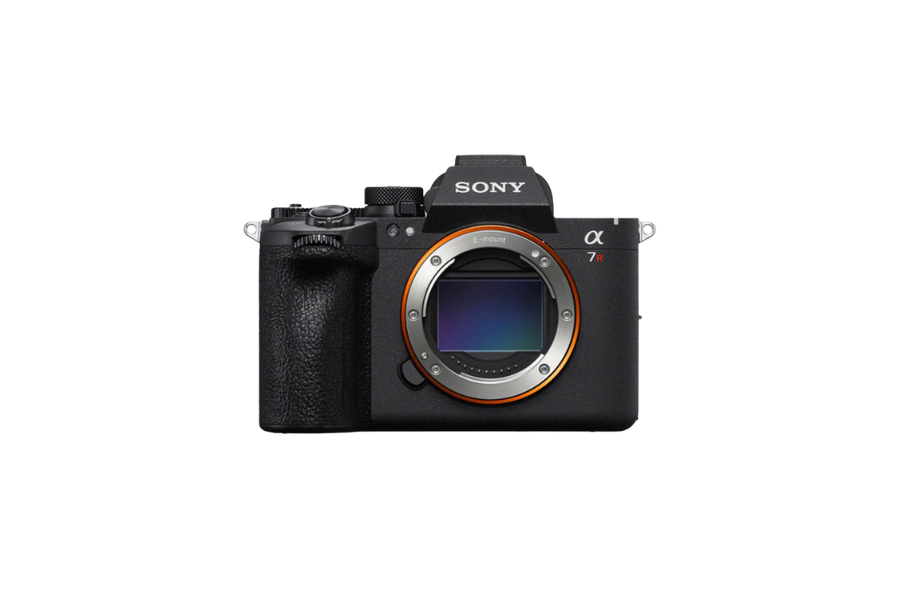
Sony’s new high resolution camera, the a7RVI, was announced today in NYC.
What Does the Sony a7RVI Mean for Photographers and Filmmakers?
Today Sony launched their new high-resolution flagship, the Sony a7RVI. At an event held in New York City, the camera was unveiled to photographers and the media for the first time.
(They also launched a new 100-400 f4.5 G Master lens which is something I am VERY interested in and will do another post on that shortly).
As a wedding and portrait photographer who also shoots sports, commercial work, and a fair amount of video, the question I keep coming back to is: is this the right camera for me?
Your needs may vary — I get that. But here are some thoughts I've worked through based on the specs, and from conversations with people who were on the ground in NYC for the launch.
To cut to the chase: will I be buying one? While I never say never, there's probably a 99% chance the answer is no.
Why I'm Passing — For Now
The a7RVI requires a new battery and a new grip, which adds cost on top of an already substantial price tag. I'm not pretending this is a permanent stance — any Sony camera moving forward will almost certainly require these new components, so it's more a matter of timing than anything else. For now, I'm content to stay in the Z-battery ecosystem. Much like when Sony transitioned from the older W batteries to the Z battery back around 2017, this is simply the direction things are heading.
The 67-megapixel file size is genuinely impressive — for the right shooter. For me, it's overkill. This is coming at a moment when both traditional hard drives and SSDs have jumped significantly in price, particularly since late last year. That means added storage costs on top of the camera's already considerable price of entry.
I already shoot a staggering number of frames — upwards of 5,000 JPEGs (not RAW — I shudder to think what RAW files would look like) at my son's baseball games alone, using an a1 and an a7V. Adding a camera that dramatically increases file sizes just doesn't make practical sense for how I work.
The cropping capability of the a1 is no slouch at 50 megapixels, and while the a7RVI's expanded dynamic range and larger pixel count would certainly help in that department, for my specific needs it represents a marginal gain — not a leap.
The AI autofocus continues to improve, as you'd expect, and that's genuinely exciting. But even when shooting sports, I find myself in a really solid place with the AF performance of the a1. Is the a7RVI's focus system better? Yes. Would it be nice to have that fancy screen on the a1? Yes. Is the difference meaningful enough for what I do day-to-day and in the foreseeable future? Honestly, not really. Again — marginal gain.
The sensor improvements are legitimately impressive. Sixteen stops of dynamic range and 8K at 30fps for video are jaw-dropping numbers. I just don't need them right now.
What This Launch Signals About Sony's Future
Here's where things get genuinely interesting — because what the a7RVI tells us about upcoming Sony cameras may matter more than the camera itself.
The Sony a1 III
The a1 remains a dream camera for sports photographers — particularly for sports involving bats, clubs, and balls — because its fully stacked sensor produces almost zero rolling shutter distortion. My 2020 a1 handles 30fps beautifully in those situations. The a7V, for all its new features and improved tilting screen, still struggles with distortion due to its shutter. From what I understand, the a7RVI shares that limitation — and honestly, that makes sense. If Sony gave this body a sensor with a fast enough readout to eliminate that problem, they'd essentially be cannibalizing their own flagship line. Something has to justify the significantly higher cost of the a1 and a1 II.
It's also likely why the a1 and a1 II sit at 50 megapixels rather than the 61 or 67 of the high-resolution bodies — pushing that kind of resolution on a fully stacked sensor at those speeds is a different engineering challenge altogether.
Will the a1 III feature a larger file size given these sensor advances? I genuinely don't know. It's possible. But it's not something I'm losing sleep over — 50 megapixels works extremely well for what I do.
What I do expect from the a1 III: all the AI upgrades we're seeing here, improved dynamic range, enhanced speed, and the new battery system. Whether it pushes beyond 30fps, I'm not sure — though perhaps Sony takes a page from the a9III playbook and adds a high-speed burst mode. A modest resolution bump, maybe to around 55 megapixels, seems plausible. But even that would be one of those quality-of-life improvements that adds more to your storage bill than to your images.
Given the timing — with the Olympics and World Cup Soccer on the horizon — I'd expect (and just guessing) that the a1 III to arrive sooner rather than later.
The FX3 II (or Whatever They Call It)
The a7RVI also has me thinking about the future of the FX3 line. The obvious upgrades would include the improved articulating screen we see on the a7RVI, the new battery system, and 32-bit float audio support.
I suspect the 12-megapixel sensor era of the a7SIII/FX3 generation may be coming to a close. A move to a larger sensor — say 24 or 30 megapixels — that downsamples from 8K to 6K or 4K seems likely, and the improvements Sony has demonstrated with higher-resolution sensors suggest noise performance could remain on par with the previous generation even at those larger file sizes.
My wish list for that camera would include: open gate recording, some form of compressed RAW in-camera, and three base ISOs instead of two — giving clean options at 800, 3200, and 12800.
The Bigger Picture
None of this is meant to rain on Sony's parade.
The a7RVI is a remarkable piece of engineering, and it signals that Sony's sensor and AI technology are advancing at a healthy pace. The quietly released XLR-A4 audio interface is also worth noting — 32-bit float audio capture is a genuine boon for event videographers who can't always control audio levels the way you might on a commercial or scripted project. And the fact that it works with existing cameras is a nice bonus.
The truth is, all the major manufacturers are making exceptional tools right now. Whatever system you shoot on, if you know what you're doing, you can produce great images and competent video.
The cameras just still don't point themselves at the subject — and they still don't know when to press the button.
Thankfully, that part hasn't changed.