
Instagram Lessons Learned Over Lunch
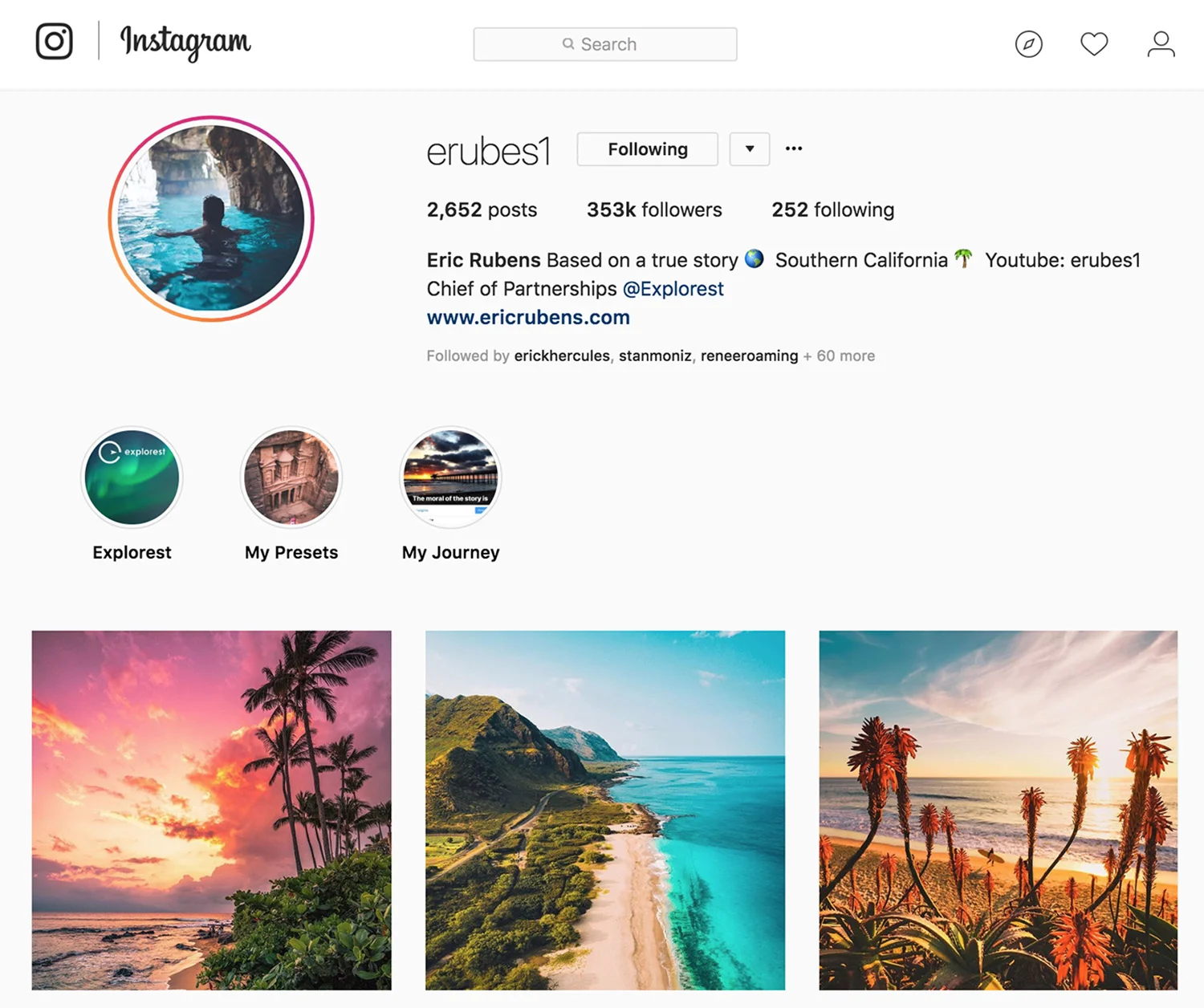
An unexpected tutorial from an IG’er with 353K subscribers!
After Sony’s Kando 2.0 in Monterey, CA ended last Friday, I am back at home and able to reflect on the trip.
It was an exciting three days of hanging with friends (when you’re drinking beers and sharing stories with the likes of long time industry big names like David Burnett, Neil Leifer and Bob Krist, you know you’re in pretty amazing company!!), sharing food and drink, meeting new people and reconnecting with old ones (even seeing friends that I had not seen in over 20 years — Ken Cedeno I’m talking about you!)…
It was on flight home and specifically in Phoenix, where I had a layover with a couple of the Sony Alpha Collective Members — Stan Moniz (IG: @stanmoniz) and Eric Rubens (IG: @erubes1) that some of my biggest insights about Instagram (IG) came from a lunch at the airport.
Eric is an Orange County Instagram megastar and has 353K followers.
A former collegiate tennis player with dreams of going pro, he got a degree from UCSD in electrical engineering and then found work in aerospace with defense contractors.
After working in the office for his company, he would head to the San Diego beaches and shoot sunset with his phone. He kept going back and shooting the sunset and sharing it. And found out he really loved doing this.
Soon a following grew (he was an early adopter getting onto IG in 2011). And grew. And grew.
And as his following grew, so did his desire to shoot with a better camera. He started with a Canon T2i and just a few years ago switched to the Sony system after trying one out on an overseas trip immediately after the NYC launch of the a7RII. He never went back to DSLR. Now shooting with the a7RIII his work continues to showcase sunsets, landscapes and all with his signature vibrant and colorful style.
His posts will often garner as many as 30K likes on IG — and incredible amount of engagements. And during our lunch, he shared his insights on the state of IG in May 2018.
Here’s what I learned:
• IG works best when you have one basic overarching vision for the feed.
Travel, food are big in the space because they are something people always will be doing and are always looking for Inspirational ideas in both as well as certain locations are aspirational (“I will go to Iceland before I kick the bucket”)
• IG works best when you use the most screen real estate which calls for the 4:5 aspect ratio (a slightly square-ish vertical).
Eric said he shoots with this in mind, even if shooting a horizontal. Even his videos are shot to facilitate that 4:5 crop in Adobe Premiere for IG placement (not conventional for video which typically is shot 16:9. He said he still shots video that way but is aware of the IG crop while shooting).
• IG hashtags work best when they are broad.
For example if he went to a Dodgers game and posted a photo, he would use the hashtag #dodgers and not #ladodgers. He thinks of the most general and easiest terms that are relevant to the photograph
• IG hashtags must be relevant to the photograph to be most effective.
In the Wild West days of IG, one could “stuff” hashtags of a lot of highly searchable ones (i.e. #justinbieber) even if there was nothing relevant to Justin Bieber.
IG realized that the algorithm was being gamed and they changed it to eliminate that advantage.
• IG photos that include people in a landscape perform incredibly well for him,
Eric said that learning to place people in the scene but not TOO prominent or even showing faces works best. He said that this makes it seem like the viewer is actually there. It gives them perspective.
• IG photos that include people in a landscape help him book clients in the apparel space.
Prior to adding this feature in his work, Eric was finding most of the ancillary work he was booking tended to be in the traditional fields that would use landscape images — such as automobile accounts.
When he added people to in essence add scale to the landscape, he found that he was then able to get work from manufacturers in the apparel space because of it. They would then feel confident that he could comfortably photograph people and not just places.
• IG led him to have a commercial representative for his ancillary work. (Now he does all that work himself).
With that large of a following, brands realize that having him post about or with their products has huge impact (or could) on their sales. To that end he worked with a commercial representative until recently, a firm that included a legal branch which helped him navigate the often murky waters of selling images commercially (rights, usage, etc.) . Now he’s taken over that role himself and is growing so fast that he is considering adding staff to assist with the work.
• IG posts for him are not multiple per day — one per day, he finds works best (and if a photo is getting a lot of engagements, he will often leave it up as the last image in his feed for a couple of days.
He said that when a post is taking off, don’t kill off the placement by adding another on top of it in the feed…let the one that is climbing the charts continue to climb. The IG algorithm pushes the last photo in the feed.
• IG posts are timed to go out around 1-2 PM PST.
This way he gets folks in Europe that are still awake, as well as in the late afternoon on the east coast, and late morning in Hawaii. It’s early morning the next day in Australia and Asia, so that time posting means that the maximum number of people are going to be awake to see his posts.
• IG posts are spread out by the various locations in the actual photos.
He rarely posts, for example, three posts from the same location in a row. Instead what he will do is post a variety of images from different spots and the hashtags will then garner followers in different locations.
• IG posts that showcase aspirational places and locales tend to get higher likes than more “conventional” spots.
He said that when he posts photos from more local spots, like Laguna Beach, for example, his likes will be down quite a bit from when he takes and posts photographs from more aspiration spots like Iceland, Bali, etc. Then the likes might be in the 28K to 30K range…more conventional spots in the low 20Ks..
• IG Stories work better when interspersed throughout the day rather than “dumping” an 8 act IG story once per day. Because each time it is done, then followers with notifications on will receive a notice. So it’s different for stories than for his main feed.
• his IG feed is very bright and vibrant and he optimizes the placement of the subject to leave a bit of space around it since the photo has to stand out as a thumbnail when people are scrolling through.
• Your IG feed strength is really encapsulated in your last 6-9 photos because when people view a profile that’s what they see.
• IG is always changing.
• IG posts are sometimes reused, say a year down the road.
• IG is so smart that it can tell if you have a sunset photo so make sure the hashtags are relevant to the content of the image since it can already tell.
• he uses his IG feed to leverage connections with brands of things that he uses. By that he wants to partner with cars, food, wine, etc. — things that he normally consumes and uses in his daily life.
I hope you found this helpful as I found it to be really one of the highlights of an amazing trip!
Find out more about Sony and Kando 2.0 at AlphaUniverse.com
Link to the Video from my talk at B & H Photo's Depth of Field Conference

Last week's trip to New York was primarily to speak at B & H Photo's inaugural event called Depth of Field.
I presented on the topic of The Photojournalist's Way -- basically my photojournalist's approach to weddings and portraits -- and frankly just about everything.
I was honored to present and created this entirely new presentation specifically for D of F.
Speaking at B & H Photo's Depth of Field event this coming Tuesday in NYC
I'm so pleased to be presenting this coming Tuesday, April 24, 2018 along with these fine folks as part of B & H Photo's inaugural Depth of Field Event!

Below is the schedule of speakers on Tuesday and Wednesday.
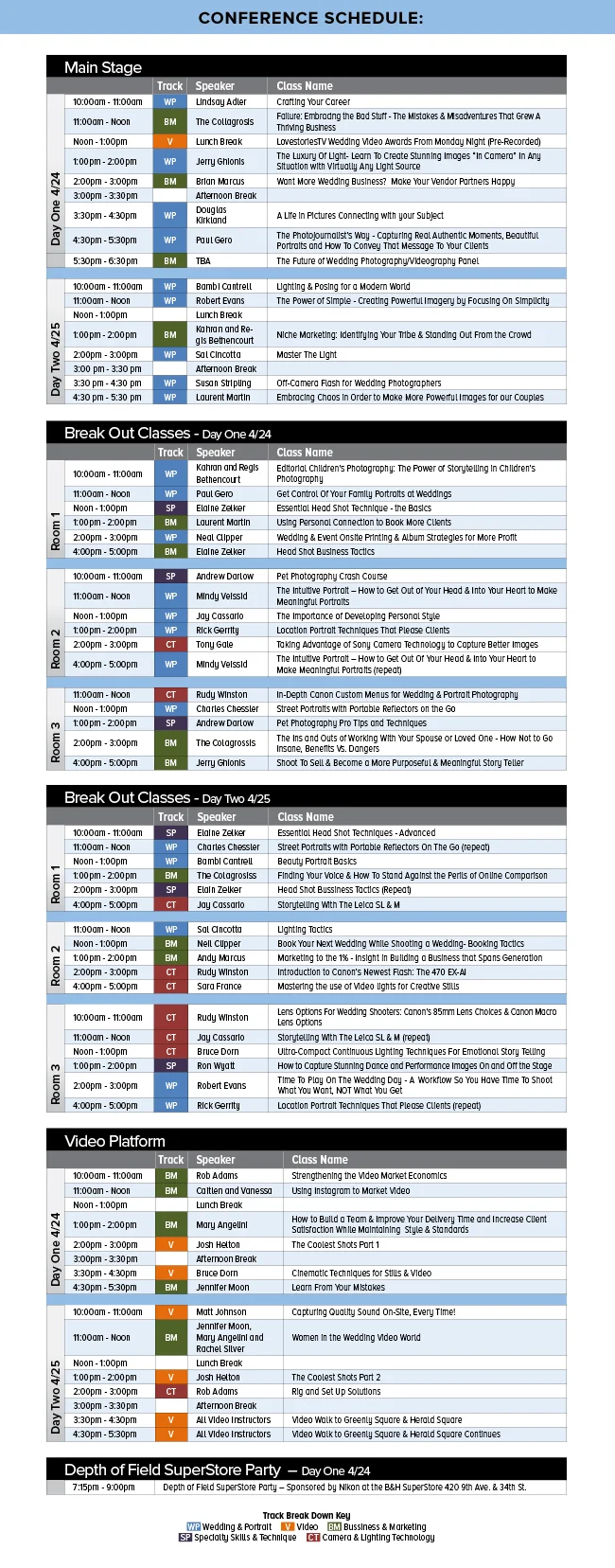
For more information, please go here
How to Set Up & Configure your Sony a7III

Shooting Sony as I have since 2014 has been a real joy and it makes me especially happy to see more and more people converting to Sony after shooting DSLRs for decades, as is the case with my friend and fellow Ladera Ranch Dad, Russell Davidson.
In this very long video I go over the a7III settings along with Russell in real time.
I hope you find this helpful and please ask any questions below. I will try to answer or find the answer for you.

Wrap Up to WPPI 2018
WPPI 2018 is in the rear view window and in this post I talk about several of the things that I noticed and saw and things that I believe are a value to photographers.

Back home from a hectic week in Vegas for WPPI and feeling glad to been there representing Sony, tired (these things always knock me out) and was anxious to get home to Nicki and the kids.
While I spent a LOT of time in the Sony booth, I did get a chance to browse the trade show floor and I saw a few things that I wanted to share.
1) Of course I have to start with the “Bell of the Ball”, and that is the announcement of The Sony a7III.
This is going to bring a ton of wedding and portrait shooters into the Sony fold if they have not come over already. For under $2k with dual slots, the fast battery, joystick controller, 10 fps, silent shooting, insane 4K video, it’s just the most value for dollar of any brand on the market. No doubt about it.
https://www.sony.com/electronics/interchangeable-lens-cameras/ilce-7m3-body-kit

Check out the article I wrote on my blog regarding this camera and it’s high ISO performance.
1a) Sony announced their new transceiver flash, the HVL-F60RM, which is a 60 Guide Number flash. It also features the companies unique swivel bounce feature and 3 LED lights which can also provide low light focus assist in AF-S mode of shooting which is perfect for wedding photographers. They’ve also added an external battery pack to help power hungry wedding shooters speed up recycle time. One of the small but very important upgrades is the addition of more metal around the foot of the hotshoe which should make the unit more robust than others that do not have that improved foot.
https://www.sony.com/electronics/interchangeable-lens-cameras-flashes-lights/hvl-f60rm

2) I spent some time in the Madera Books booth and was incredibly impressed with the quality of materials and workmanship in their products. The “flush-mounted” albums (the one that mount a complete sheet of photo paper to a board and then are bound) are thick and substantial and have a real boutique feel to them. They’re a smaller company that is creating some wonderful books.
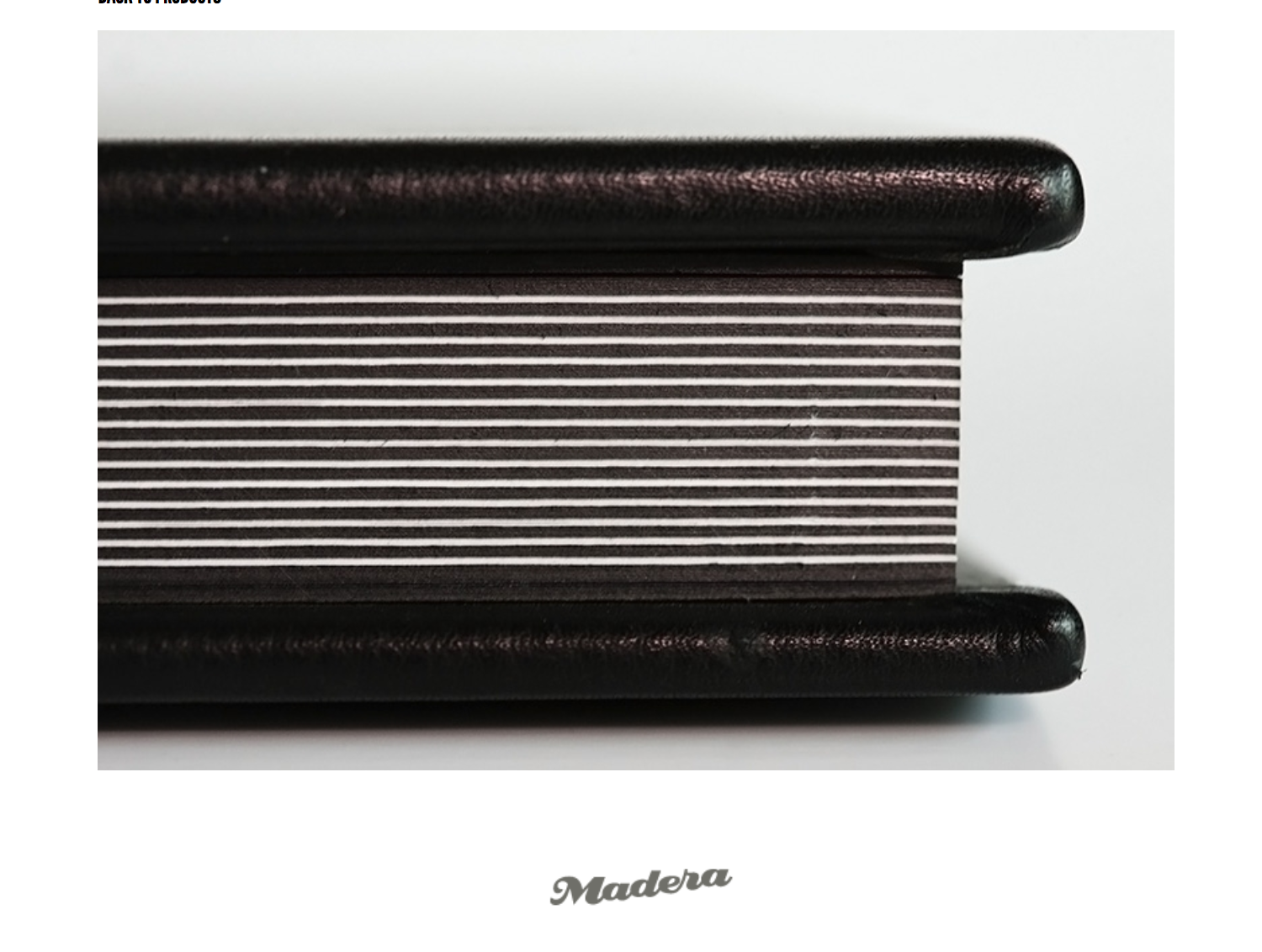
It was also great to reconnect with Jessica Claire, who’s brother in law Michael Norwood is the principal with the company as well as Victor Sizemore, a destination wedding photographer. Both I have known for nearly 15 years and they are doing such wonderful work and nice to see them sharing their love of Madera at the show. (That is the thing about the WPPI experience. It is in Vegas and that is typically a Love/Hate thing for most folks but the best part of it is seeing old friends who consistently come here (and my friends in the photo equipment industry).
3) Speaking of books, I ventured over to my friends at Graphi Studio and saw their unique presentations. They are truly the most unique ways to present albums that I have ever seen. They’re not books in the classic sense, but instead they are pushing the boundaries of what people perceive of wedding albums and the results were astonishing. Very stylish yet timeless and with leathers that are quite wonderful to the touch. But the thing that knocked me out the most was the Amalfi Paper in a Japanese bounce book style that they displayed on a destination wedding by the talented husband and wife team of Two Mann Studios. The range and vibrancy of the prints. Lovely to see Maureen Neises with GraphiStudio who is in charge of their US office.

https://www.graphistudio.com/en_US/home
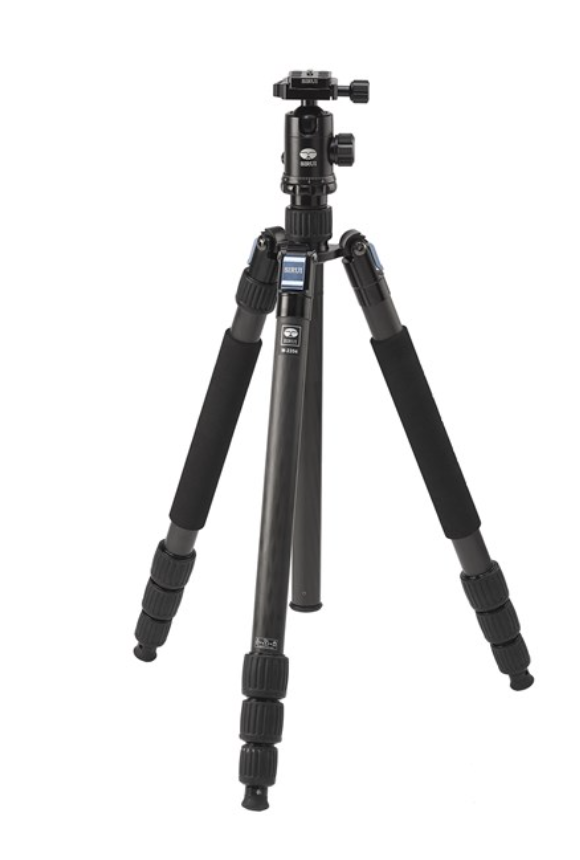
4) My tripod sponsor Sirui USA was on hand and they reported that sales were brisk (they were selling through retailer Samy’s Camera who had a booth). I’m glad to see folks starting to discover this gem of a company. Not only is Paul Zakrewski, their marketing director, on of the nicest people in the business, they make some insanely great tripods that hit a sweet spot for price and performance. I absolutely love using their Video Monopod and their Tripods for my stills and video work. They showed a prototype 3 way head which should be of interest to landscape and interior photographers.
Having breakfast with Paul and fellow Sirui Ambassador Marc Weisberg was a highlight of the day. If you are an interior photographer and want to learn from simply the best in the business, check out Marc’s seminars at: https://luxuryrealestateimages.com/mastering-luxury-real-estate-photography-3-day-intensive-palm-springs-ca/
5) Sigma announced that they are coming out with 9 new lenses (prime lenses from 14mm to 135mm!) in their highly acclaimed Art Series made natively for Sony E mount. This is huge because it shows that more and more companies are realizing that Sony is in it to win it. Sigma will also retrofit the mount of their Canon and Nikon glass for Sony E mount which is also a big deal since it saves photographers money.
https://www.sigmaphoto.com/article/art-primes-for-sony-e-mount-announcement

And I also got to put my hands on their new 14-24mm f2.8 Art Series wide angle and it is solid. The zoom mechanism and the manual focus mechanism are some of the smoothest that I have ever used on an auto focus lens. These really felt as if they were dampened like you would find with old school, helicoid manual focus lenses.
https://www.sigmaphoto.com/lenses/wide-angle-lenses/14-24mm-f2-8-dg-hsm-a