

Sony's new A7II has a beefed up construction and a redesigned shutter release button and configuration, making it more comfortable and easy to grip. Sony added an additional Custom button on the top and subsequently redesigned the accessory grip to match the new button layouts and design. The camera weighs 100 grams more than the A7 and has reinforced the body with more magnesium alloy making it feel more rugged and durable.
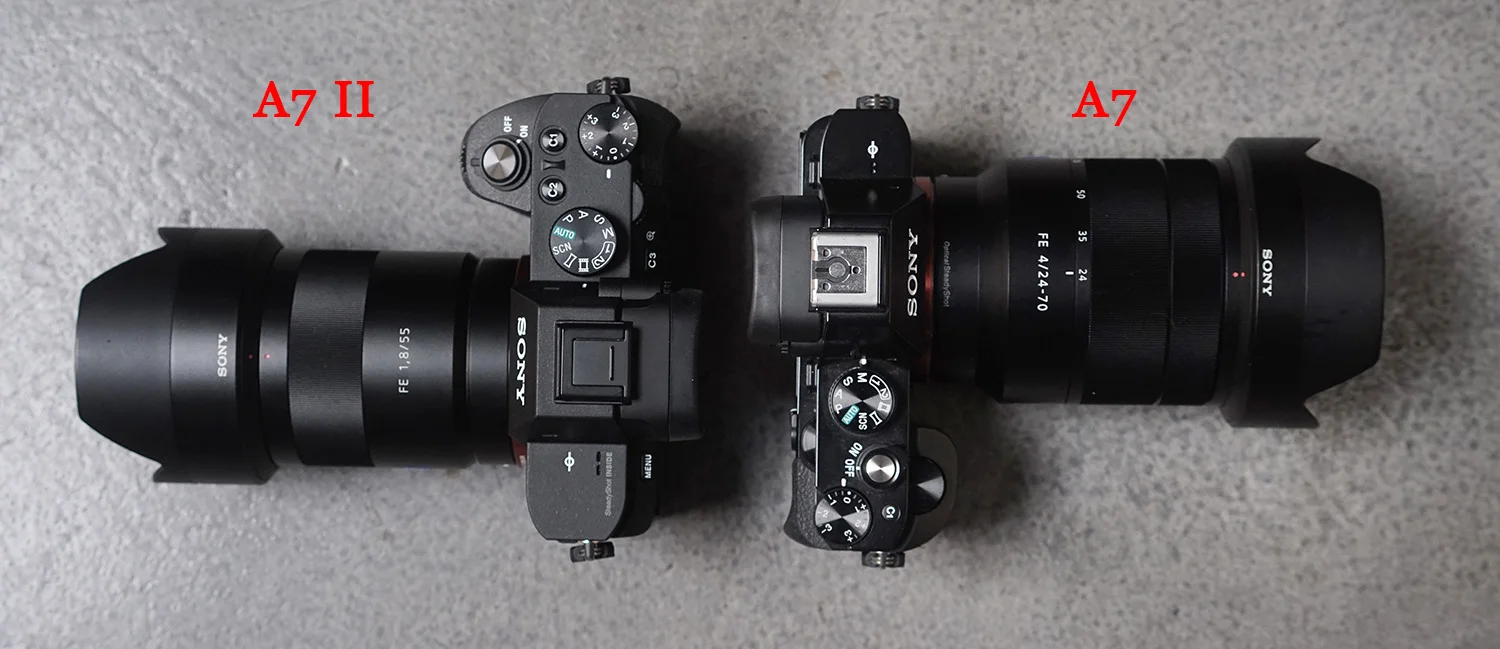
The A7II (left) and the A7 (right) are almost identical in size which keeps with the design philosophy of mirrorless cameras -- small and lighter --yet delivering images on a full frame sensor. Sony released the A7 classic almost a year ago and the A7II is shipping in the US now.
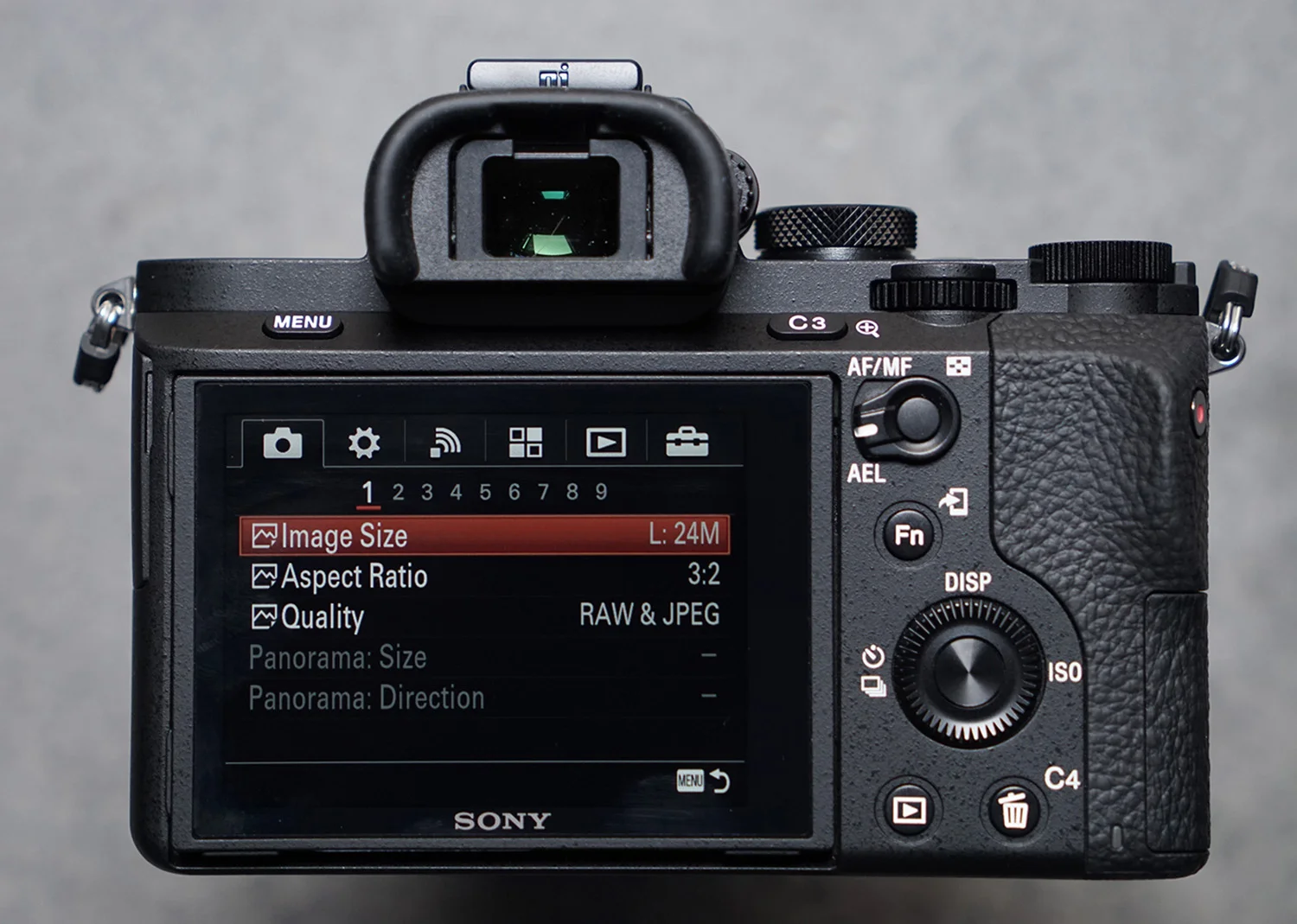
Sony redesigned the shape of the back screen area making it more sleek and solid. The screen itself got a refresh, it now has a resolution over 1 million pixels. The screen itself articulates a bit further from the body -- this way the EVF won't block the screen when doing a waist-level shot.
Last Friday, I received the Sony A7II camera to test from the folks at Sony.
Since then I have been putting it through the paces in some of my client work (several portrait sessions) as well as putting it to work photographing around the house (something I've always done with my previous cameras).
I had originally seen the camera and shot a bit with it the one week ago (last Monday) and was impressed --it actually exceeded my expectations -- I couldn't wait to get one in my hands for an extended period of time to test it and see what this new camera can do.
And so far I have been very satisfied.
But first, let me go over what I consider to be the best things about this new camera, which comes almost a year to the day when Sony made headlines by delivering the original A7 -- the world's first mirrorless full frame (35mm sized sensor: 24 x 36 cm).
It's been absolutely amazing to see what is coming out from Sony since then -- the A7S and A6000 and more lenses -- as well as other from other mirrorless camera manufacturers.
They seem to be on a mad rush to make the best, most innovative cameras as fast as they can while companies making primarily DSLRs are updating and improving at a much more subdued rate. That's great for us as end users -- we get much improved cameras much faster (even though it is a source of frustration for some).
That Sony has updated, revised and made a better camera so quickly is amazing. I'm thankful to be the benefactor and thankful that they continue to evolve world class cameras in such a small form factor (my back and shoulders thank them too!)
This camera answers most if not all of the little frustrations that I had with the original A7 and I have to say that when I saw the camera last Monday I was more impressed when I saw it than I had even hoped.
I thought it would be a worthy upgrade, and now, after a few days of the camera in my hand, I know that is.
Upgrades:
1. 5 Axis IBIS
This is a built from the ground up, an entirely new and proprietary design that now allows you to have image stabilization on lenses such as the 35 f2.8 FE Zeiss and the 55 f1.8 FE Zeiss with coverage of X and Y, Pitch and Yaw and Roll.
For still photographers this is a boon allowing for longer shutter speeds without the need for a tripod, and I believe it to be the same (if not more) for the video shooters out there.
I have been testing this camera and as you can see from the photographs below being able to shoot handheld at 1/4 of a second with a 200mm focal length is pretty impressive. As long as your subject is stable, then sharp photographs are now possible in what we jokingly referred to as the "Hail Mary" range of light (hold your breath, dig your elbows into your body and say a prayer before you shoot at a slow shutter speed shot -- thank you Bill Allard for that description).
I've placed a nearly 3 minute video of my son reading a letter from Santa and I believe it shows the amazing potential of this camera to shoot handheld with video. Perhaps this will have an impact on run and gun productions and the need for discreet - yet stable - video footage. I was thoroughly impressed with what was possible and can only imagine how this would be in the hands of an experienced Director of Photography.
I think wedding photographers who want to add a bit of video will find that a much easier situation with this camera over anything that has come down the road before it. With the EVF and 5 axis IBIS, handheld video - even with a long lens - is an even better proposition than mere lens image stabilization alone.
As a still shooter primarily, it allows me to make group photographs at slower shutter speeds without a tripod at a wedding or a reception or party. This can make the work better and more professional and give me additional confidence in my work.
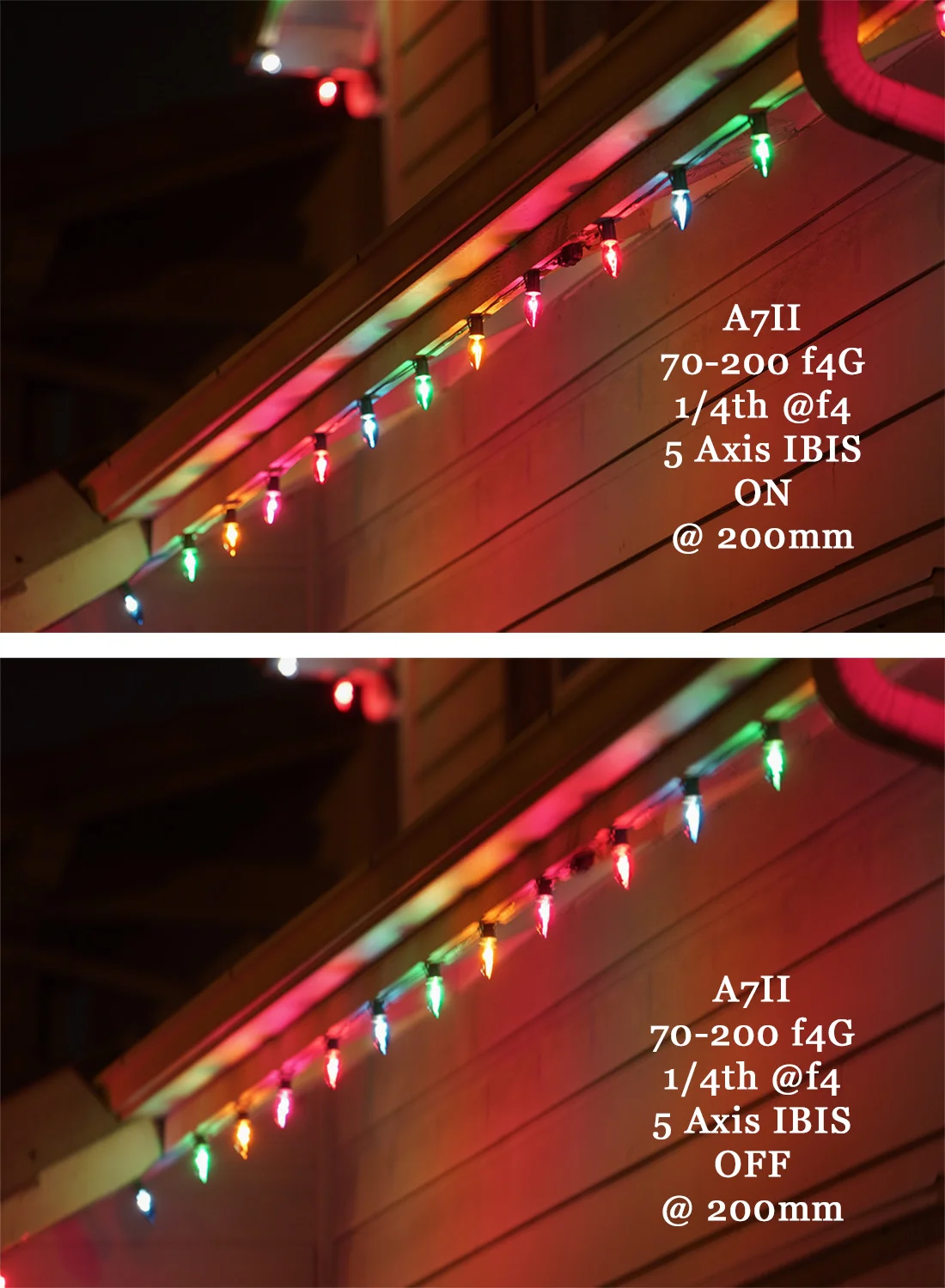
Using the 70-200 f4 G OSS at 200mm at 1/4 second, the new 5 Axis IBIS allows for a sharp image which is astounding for such a long focal length! The bottom image shows the result of turning IBIS Off.
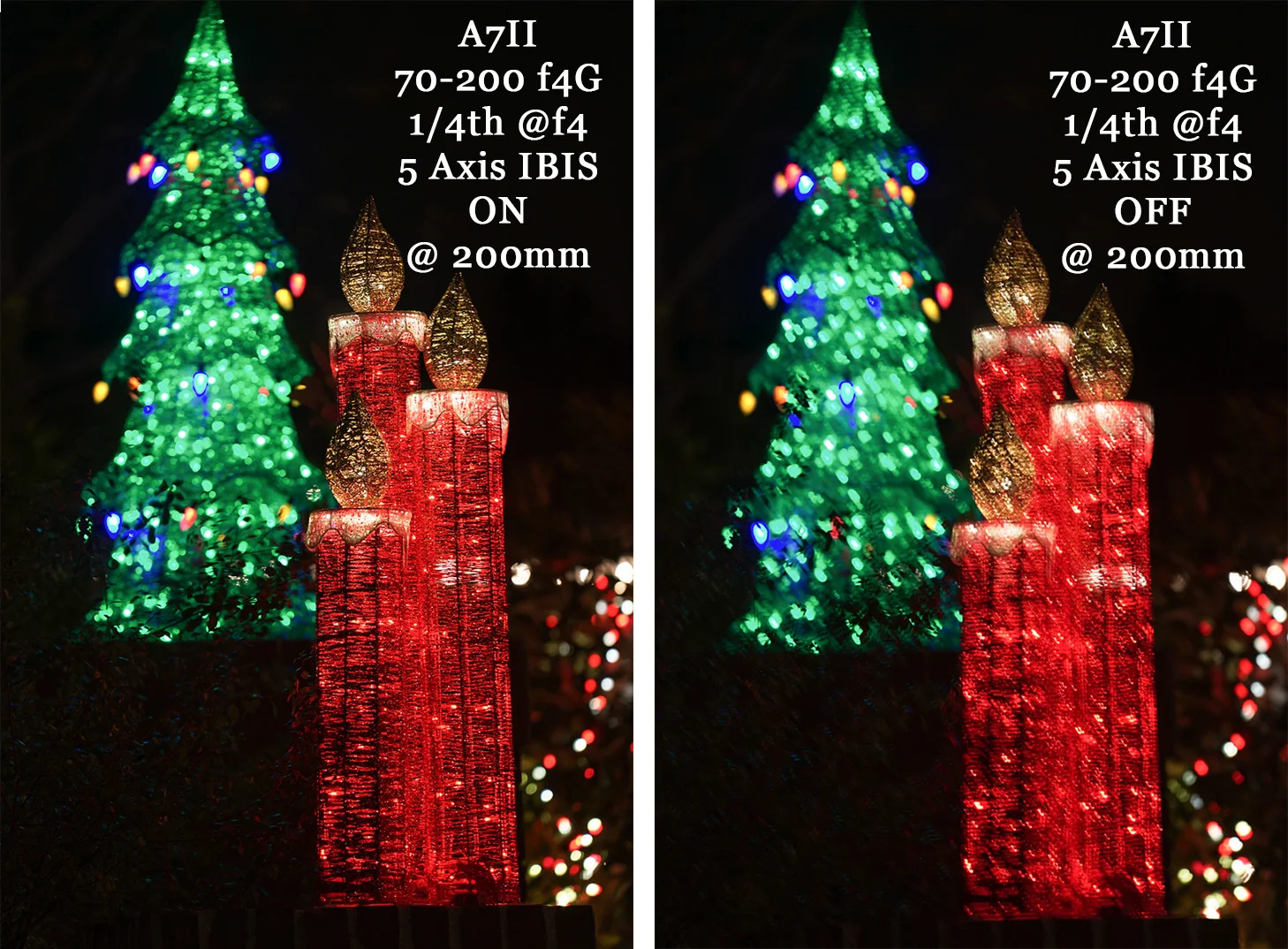
Even while shooting a vertical at 200mm on the Sony A7II, the 5 Axis IBIS allows for a steady shot, again at 1/4 of a second.

In this case I didn't want to go too slow with shutter speed for fear of too much movement, but it allowed me to work with a relatively slow ISO (500) while still retaining enough shutter speed to stop the action.
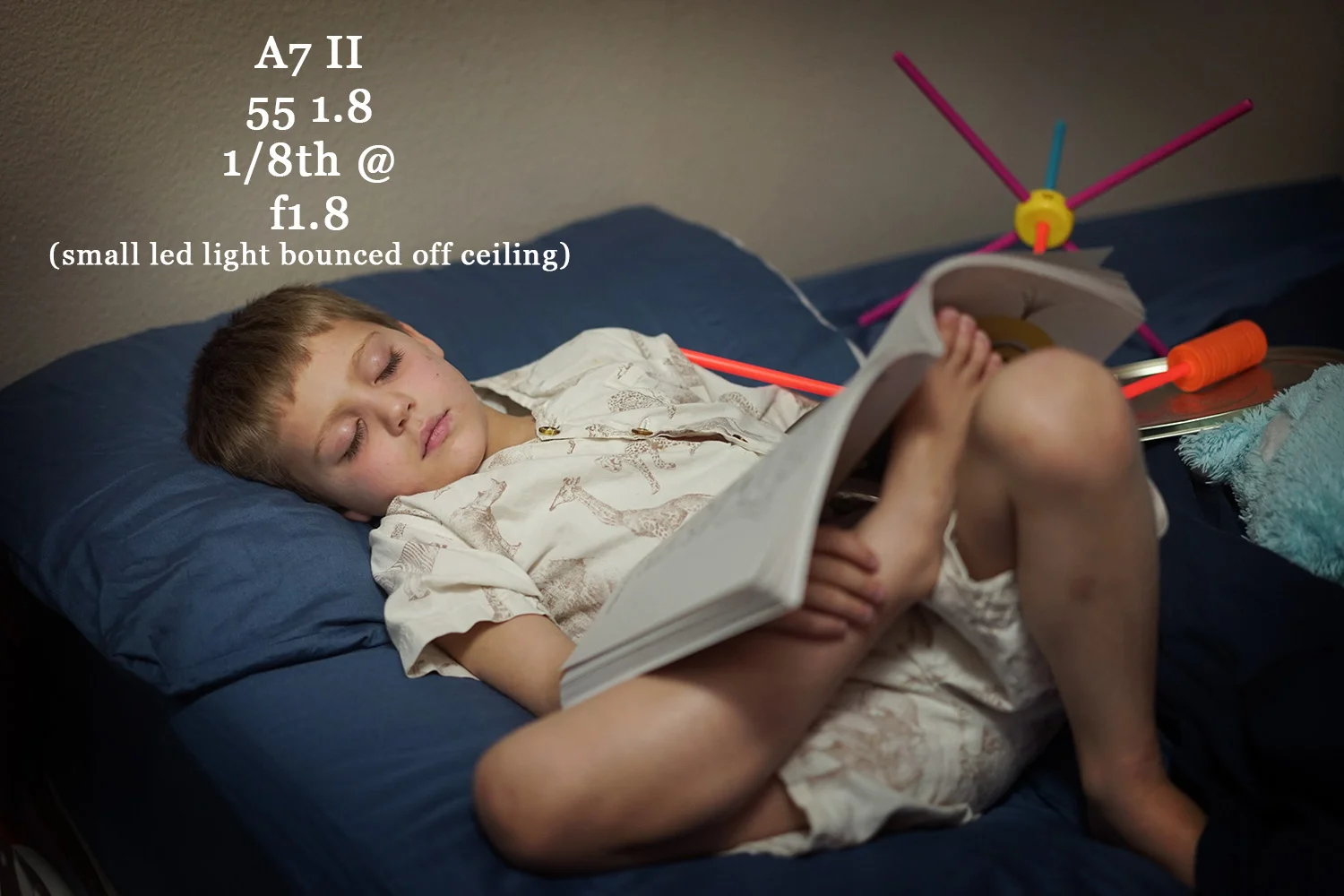
Now that our little guy fell asleep, I was free to drop down to a slow shutter speed while using the normal lens on the A7II.
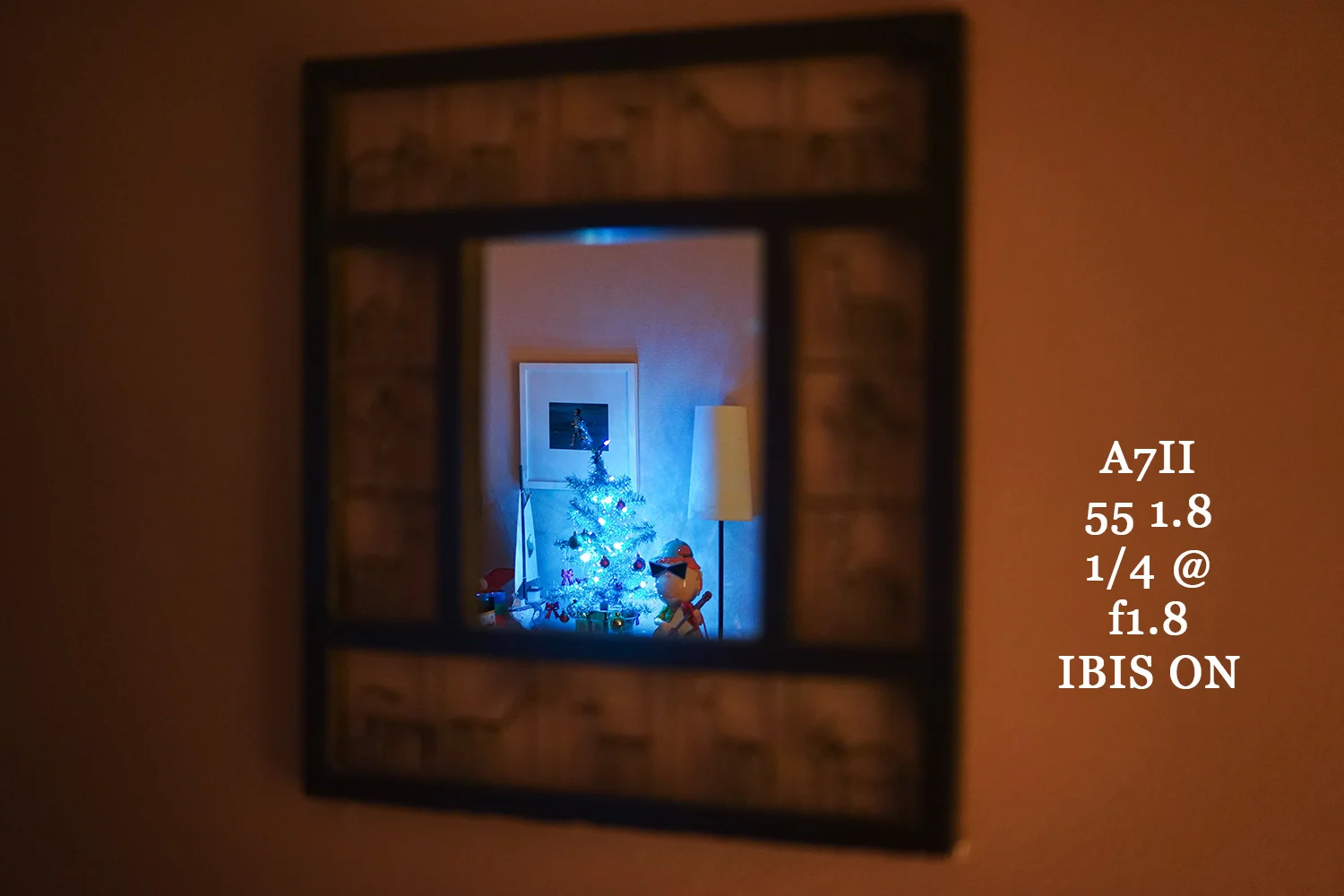
Coming into our son's room to check on him later at night, I noticed the reflection of his tiny Christmas tree in the mirror. I wanted to see how low I could go with the camera and lens combination and it produced very sharp results.
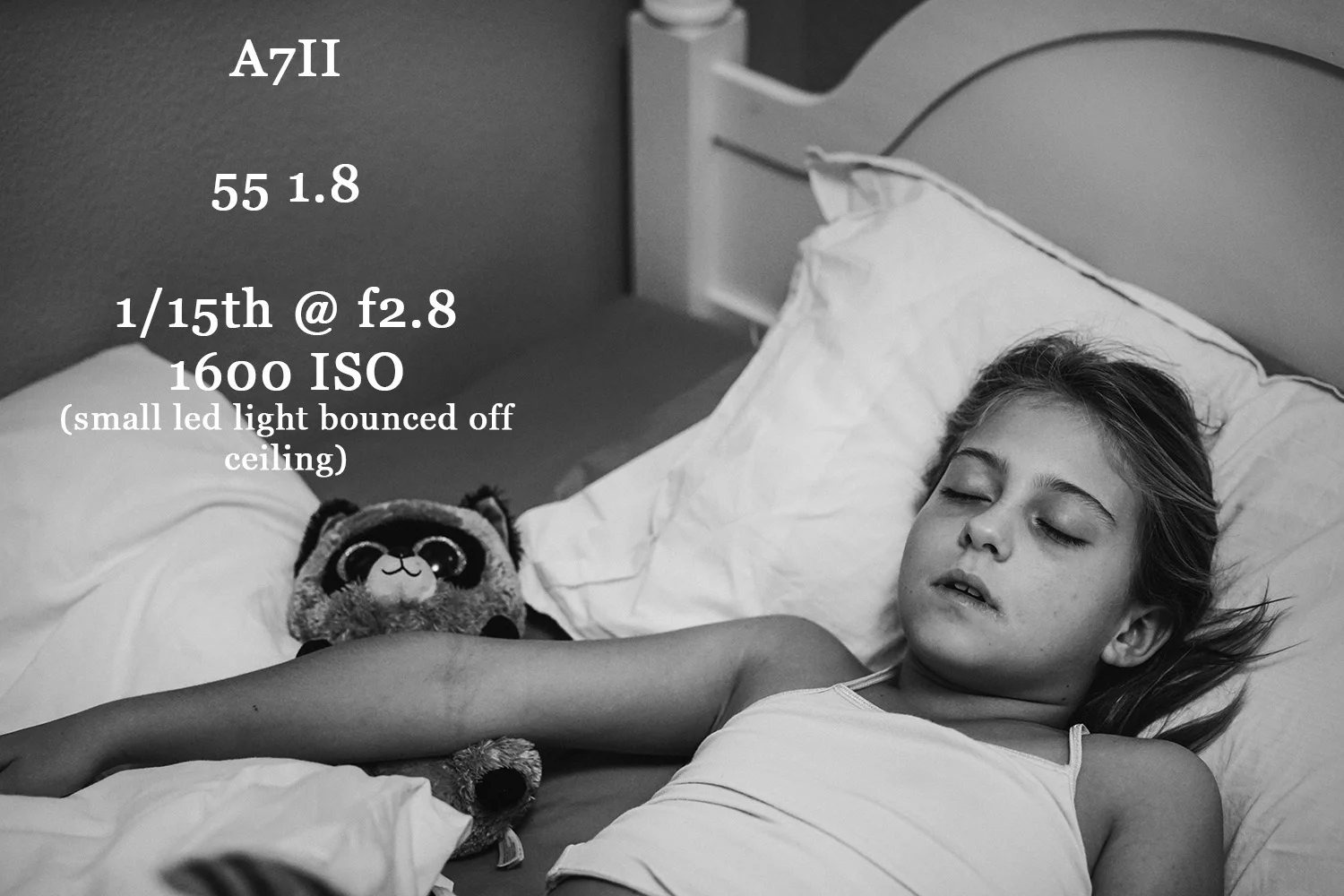
My daughter Kate sleeps with her little Ty Pets. Using a small LED light for illumination (on a lightstand) I was able to work in the low shutter range with a higher ISO (1600) but not one that is too high.
Using a Sony A7II with the 24-70 f4 FE Zeiss lens, Paul Gero, a Ladera Ranch, CA Portrait and Wedding Photographer and a member of the Sony Artisans of Imagery Program showcases the camera while shooting an extended video (nearly 3 minutes long). No grading, audio from the camera only, and no warp stabilization was added.
2. Better, faster, more accurate Auto Focus
Sony gains big time in both focus accuracy and speed here compared to the legacy A7. Sony is claiming a 30% boost and I would say that that is a fair assessment and it might actually be more.
I believe that in most portrait situations the AF speed is adequate as well as for most wedding types of coverage. Would it be used by a Sports Illustrated photographer to shoot a magazine action assignment? Probably not, but that is not the target market.
For wedding shooters who want pro-level AF without the backbreaking size and weight of the larger DSLRs with larger primes and fast aperture zooms, I can see that this camera will not only get their notice, but gain a following.
In the Wide Area focus mode on the A7II, you will see the moving little cubes like you see when using the A6000 or the A77mII with their Sony 4D focus. While the A7II doesn't have the 4D focus designation from Sony it is still a significant improvement and a noticeable one.
The buffer is faster with both RAW and jpeg files and that helps a photographer during a fast breaking situation.

My son runs to me after grabbing the mail. Made with Wide Area Focus and High Speed frame rate, yielded this result. Incorporating features from the Sony A6000 and A77m2, the A7II has noticeably improved AF performance over the original A7.
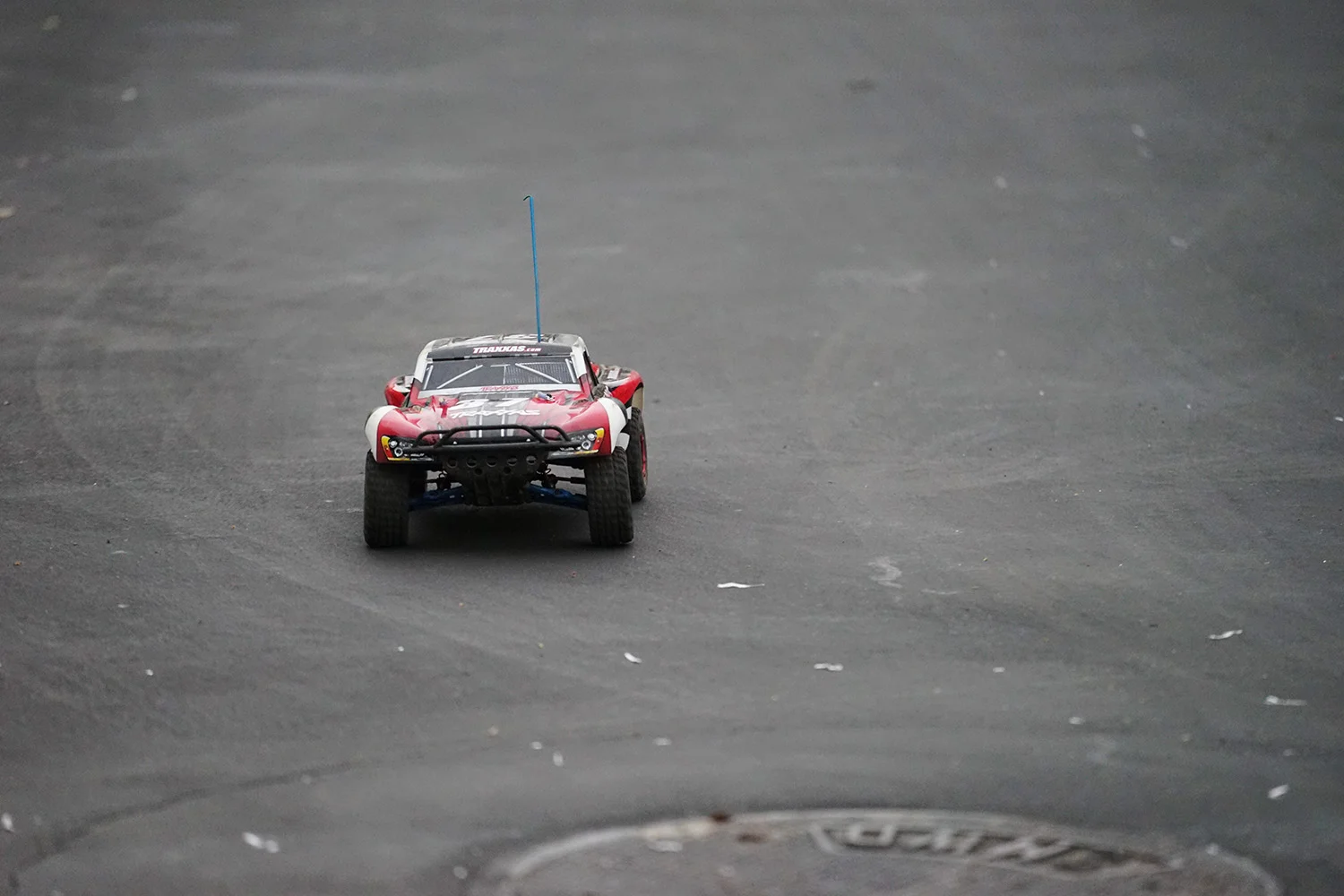
Our neighbor happened to be out with his son using an RC car and the A7II with 70-200 f4 G OSS lens captured this image.
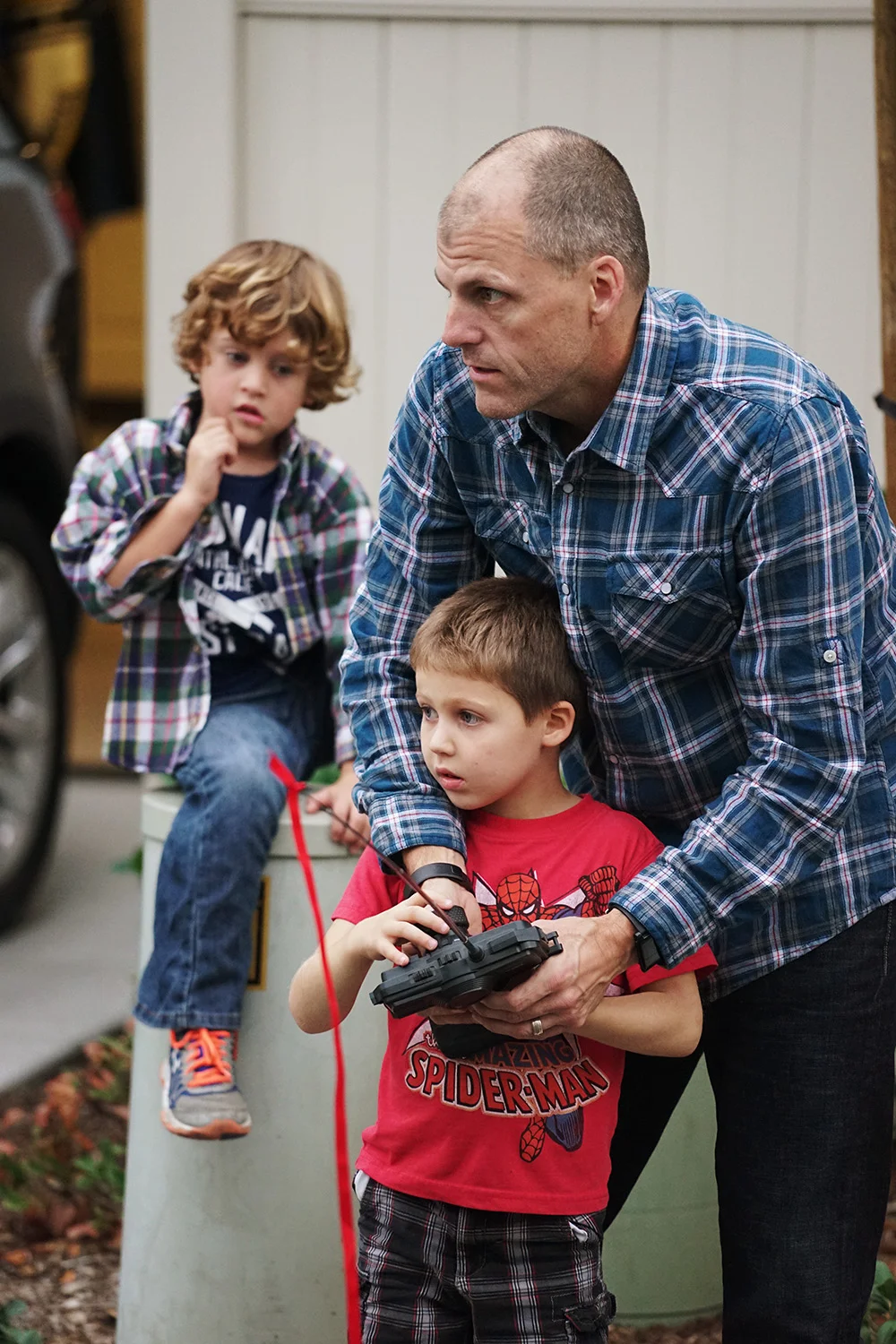
Our neighbor helps Sparky operate the RC car in this photograph made with the 70-200 f4 G OSS lens. Focus is much improved over the original A7 and face detection works incredibly well on the camera.
3. Improved Video -- adding XAVC-S and S-Log 2 (might make this #1 for videographers)
This camera has gotten a pro-video upgrade which it shares with it's sibling the A7S. It has S-Log video which now goes down to 1600 ISO which is one full stop lower than it does on the A7S. It doesn't have 120 fps like the A7 but that's definitely not a problem for me.
4. Improved Image Quality
When I first took the camera out and began to shoot, I noticed what appeared to be a slight difference to the look of the images compared to previous Sony models. The camera was set to Picture Profile 1 and I found it had a nice, film-like appearance to it rendering flattering skin tones.
I asked if Sony had indeed made improvements to the look of the files and was told that they indeed had. While all the images I sell to my client are finished in post production, for quick proofing purposes, this can mean an improved look straight out of camera.
5. Better, more solid build quality
Not only is the finished a matte, textured black (rather than the shiny black of the A7), it's 100 grams heavier and uses more magnesium alloy in the body -- for example check the bottom of the camera.
The mount is better than the A7 and is rock solid because now, like the Sony A7S, it is all metal.
When you pick up the camera it feels even more like a pro camera while still being very small (when compared to a pro-level DSLR).
6. Improved shutter button position and bigger shutter release button
Sony redesigned the placement of the shutter release and it's a much more natural and relaxed position for me. The shutter release button itself is increased to 10mm from 8mm so that gives you a little bit more area to touch with your finger on the shutter release button.
8. Improved SD card slot and revised placement of Microphone, Headphone, & HDMI ports
Now you slide the SD card in sideways and not downward into the body as the previous A7 did. A small upgrade, but I like the position placement of the new door. It also feels more secure and more like I was used to on DSLRs.
Also, Sony raised the placement of the auxiliary ports on the left edge of the camera so that they are higher. I suspect the reason for placement is to aid videographers using the camera during production.
9. Improved rear screen resolution and improved angling of that screen.
Now the screen comes out a bit further so that it is no longer blocked by the EVF eyepiece when holding it at your waist. It is improved to over 1 million pixels in resolution so it gets a bit of a bump. It is also more tightly recessed against the back part of the camera making it a bit trickier to pull out but that's good because it stays put when you want it to.
What This Camera Means (IMO)...
I think this camera is an important and impressive step in the lineage of the Sony A7 line. The faster AF and improved buffer make it a better fit for more demanding professional users.
The 5 Axis IBIS is truly going to expand the range for photographers, especially when working in low light when subjects don't move. It's heavier, more solid and just feels more "pro" than the previous model and that helps instill confidence in the end user.
Though I'm not a full time videographer, I suspect Videographers & Cinematographers, will appreciate that impressive IBIS as well.
Plus the new video codec brings the camera to broadcast standards and the new S-Log 2 profile allows for expanded gamut video shooting for professional users.
That Sony has done this all in a year's time is pretty astounding to me.
Many photographers I know have been "on the fence" when it comes to mirrorless. I know that up until a half a year ago, I was too.
But this camera, I believe, will address many of the concerns that demanding wedding and portrait pros will have about these types of cameras. I know many that love the Olympus system but were frustrated by the smaller size of the micro 4/3rds especially in the area of high ISOs. Some of those "limitations" (perceived or real) kept many from wholeheartedly adapting to mirrorless. I think this will be a camera that those users will look to with great interest.
Now Sony comes along with this camera that has the in-body stabilization over 5 axis, significantly improved AF and a more rugged and beefed up body. Those features as well, will interest those pro users.
I think this will be the camera that many pros who, up until now, were never considering mirrorless will notice.
I know the size benefits were a huge attraction to the mirrorless cameras for me and after using the Sony cameras for 99.9% of my work for the past six months, I can say that the advantages go far beyond mere small size alone.
These cameras can and do deliver professional grade images. I think this is a camera that should deservedly get a lot of looks from experienced wedding and portrait photographers that want to not only lighten their load while not missing a beat when it comes to the comfort level from working with a pro-grade body.
If this is what Sony has come up with in only a year's time, it begs the question: What will they come up with in one year or two years down the road?
I'm obviously excited about this camera and I hope that those reading this will get the chance to try it for themselves.
I hope this blog post and videos are useful to you. Please feel free to leave comments below and questions. I will try to answer them as quickly as I can. Thanks for reading and watching!
Paul Gero
Ladera Ranch, CA
December 12, 2014
Edited to Add: Lightroom supports A7II files now.
Below a few recent portraits made with the A7II all processed from the jpeg files (normally I work on RAW files but waiting for LR to update for the A7II files.

Samantha A7II, 55 1.8, 1/640th at f2.2, 400 ISO (reflector fill) processed from the jpeg file, enhanced in Replichrome and Alien Skin Exposure 6.

Hudson A7II, 55 1.8, 1/320th at f2.2, 200 ISO (reflector fill). Processed from the jpeg file, enhanced using Replichrome and Alien Skin Exposure 6.

Ballerina Hudson A7II, 55 1.8, 1/400th at f4.5, 250 ISO (reflector fill). Processed from the jpeg file, enhanced using Replichrome and Alien Skin Exposure 6.

Eva A7II, 55 1.8, 1/250h at f1.8 400 ISO. Processed from the jpeg file, enhanced using Replichrome and Alien Skin Exposure 6.