
A Tribute to Rob Schumacher
A remembrance from a friend and colleague
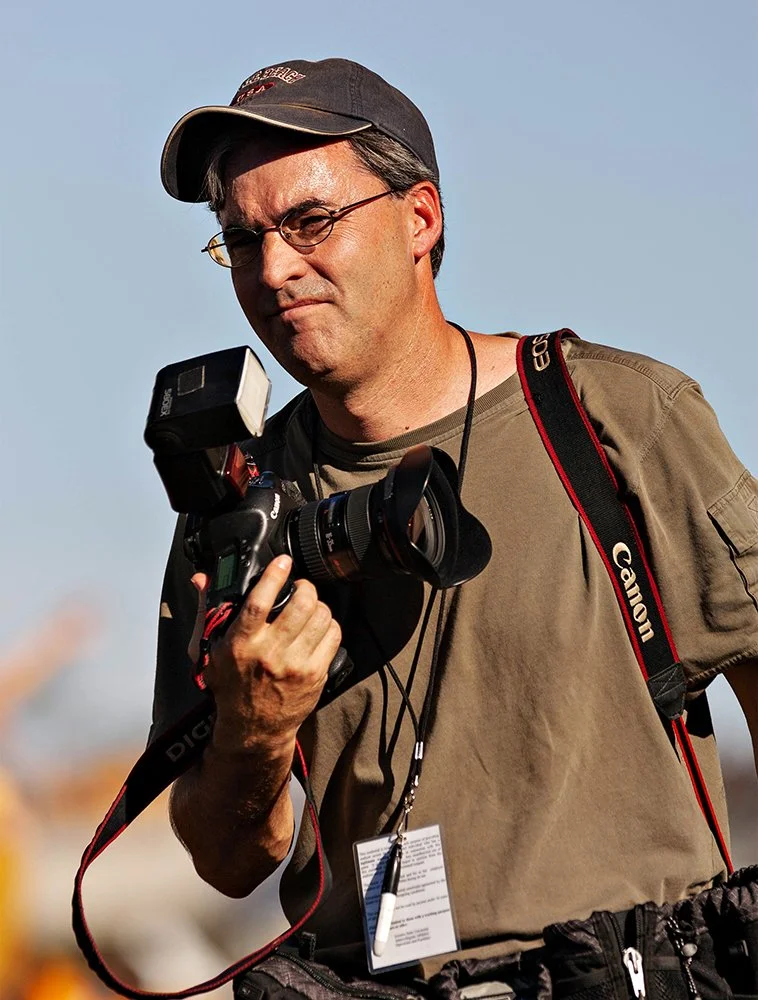
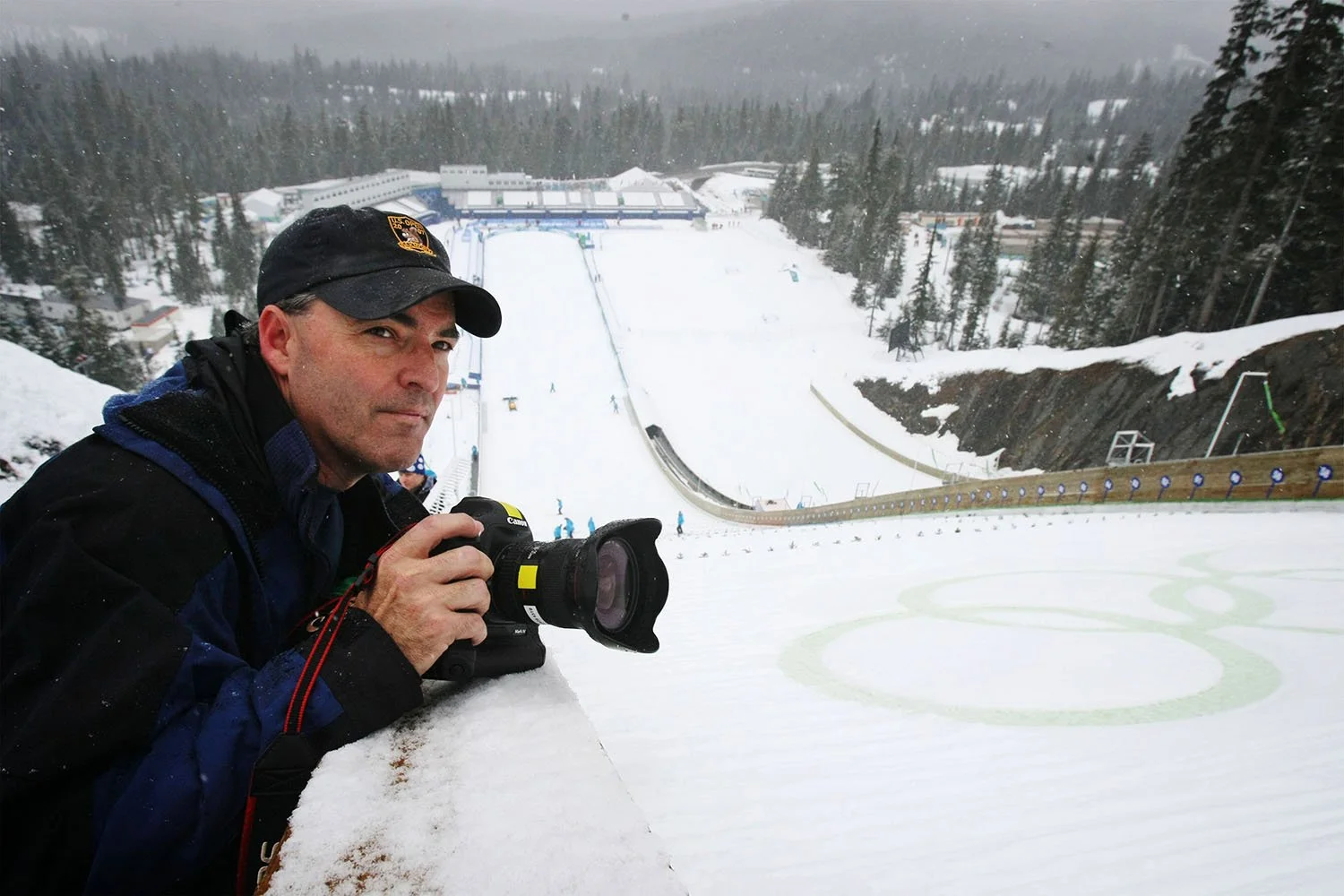
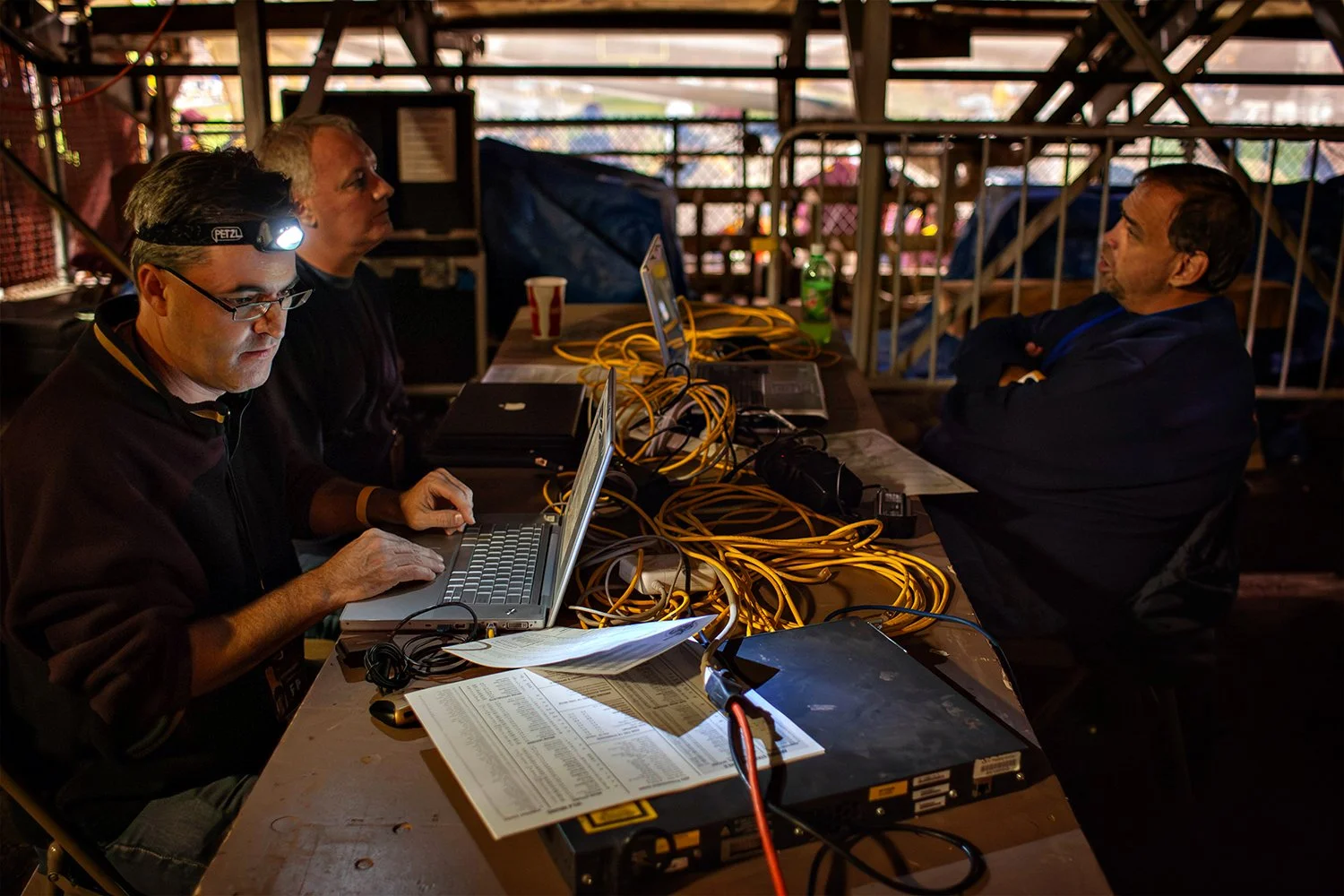
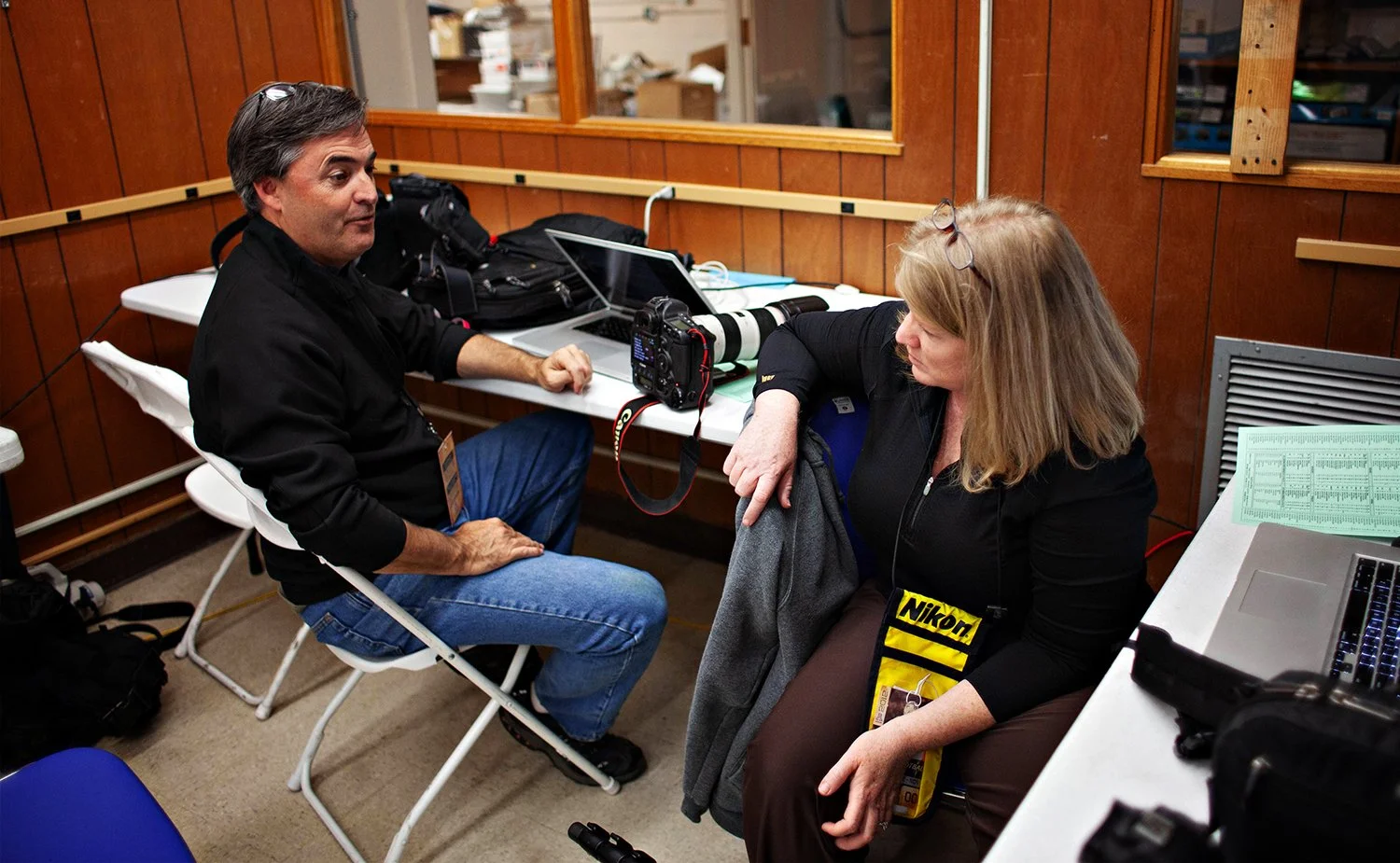
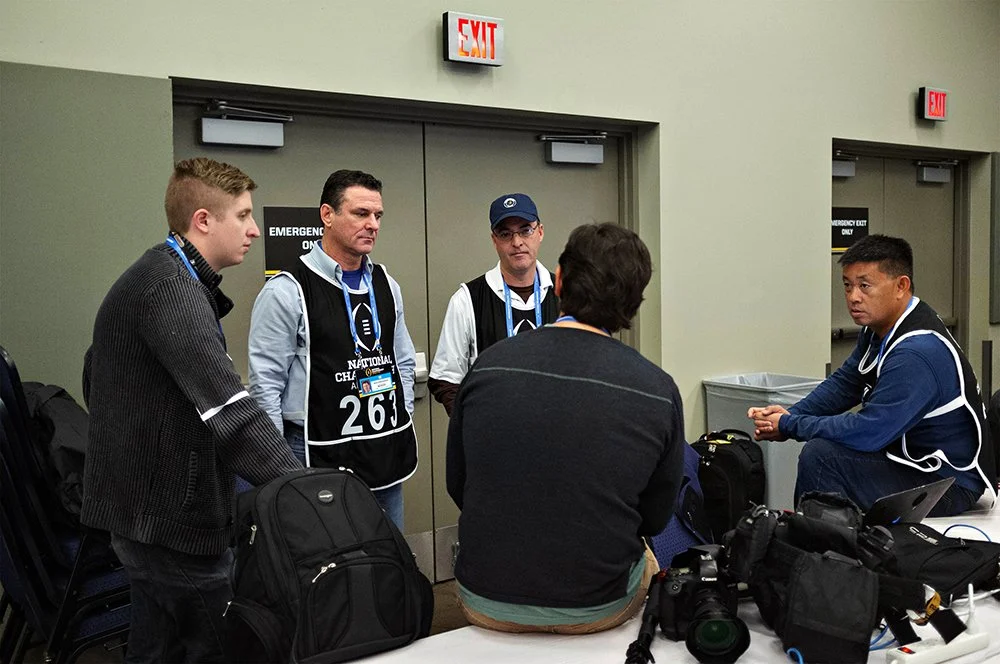
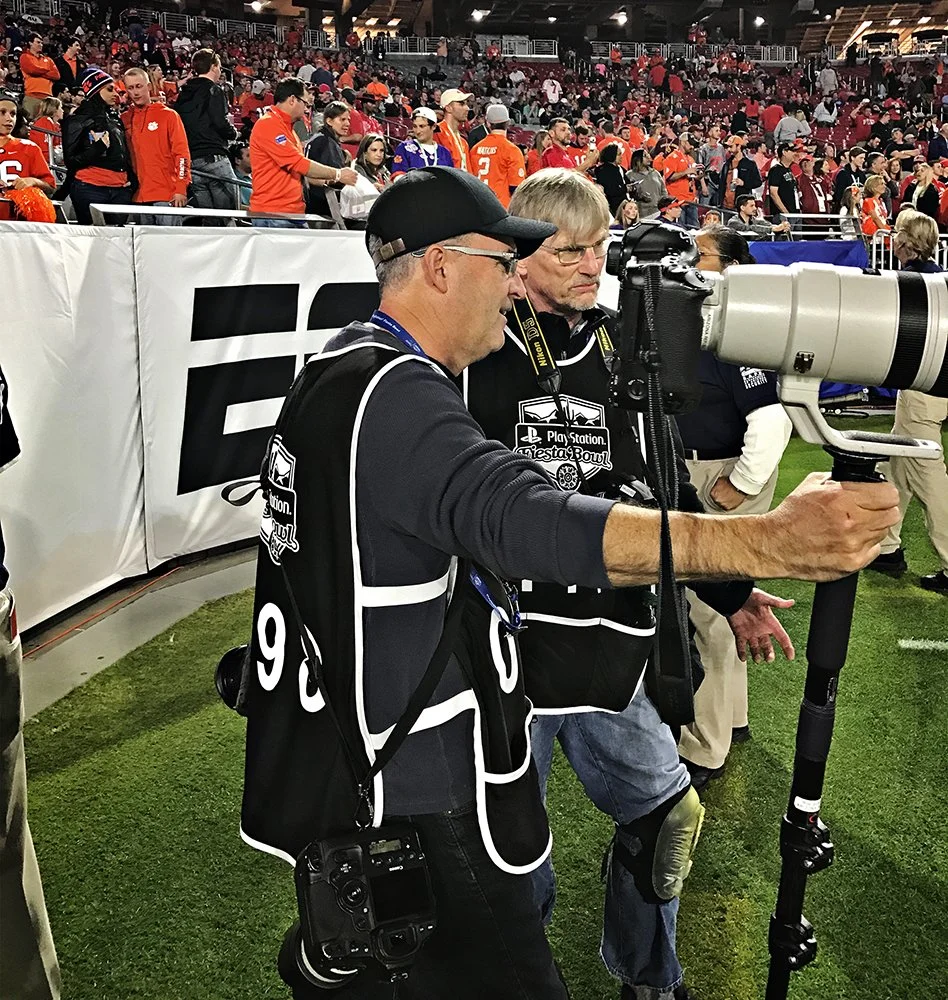
Rob Schumacher on assignment for the Arizona Republic in 2007. This photograph and the other photographs (below) courtesy of Tom Story.
The late-night email from a former colleague was ominous — one you never want to receive.
Rob Schumacher was gone.
Rob and I were colleagues at the Arizona Republic for nearly twelve years. The words that come to mind first are quietly fierce — as a photographer, as a competitor, as a friend. He was a meticulous planner and student of every sport he covered, and he lived to make not a good frame, not a pretty good frame — the best frame.
We met briefly during the 1988 campaigns when Jesse Jackson's campaign came through Tempe. Rob was the Phoenix AP's number one stringer, and he wanted to be wherever the big story was — sports, news, whatever. He was hungry for all of it. And despite that drive, he went above and beyond helping me get my photographs back to my paper in Chicago, staying longer than he should have to help a stranger out.
When I interviewed at the Republic two years later, Rob had taken a job in the Scitex department — the film era's scanning operation. But the air-conditioned darkroom wasn't where his heart was; it was merely a foot in the door. He wanted to get back on the street.
Rob got out of that digital cave and back onto the street, and his drive, talent, and passion propelled him to better and better assignments because he delivered. Always.
The year Charles Barkley came to Phoenix — 1992 — Rob and I spent countless hours together: meals in the media room, games on the road, him on one end of the court and me on the other, both of us quietly competing for access to the strobe units mounted in the rafters. Whether he was shooting with the strobes or with the available light, Rob was dangerous. It took my very best to make a better image than he did, because he seemed to always be on.
One image of his from the 1993 playoffs stays with me. Dan Majerle hit a record eight three-pointers against the Seattle SuperSonics, and Rob had the presence of mind to shoot it horizontally — unusual for basketball, a vertical sport — capturing the shot, the players, and the scoreboard in a single frame. It ran six columns across the top of the sports section. That wire-service training of his taught him to pack as many storytelling elements into one image as possible. He nailed it, as he so often did during that run, making all of us — Rob, John Samora, and me — look good.
That Suns run to the 1993 Finals was the best stretch of my nearly twenty years in daily journalism, and a large part of what made it special was sharing it with Rob.
He was the one who called me in January 1997 to tell me our merged papers were shuttering the afternoon Phoenix Gazette.
That tumultuous week — dozens of careers in the balance, management handling it with a shocking lack of empathy — we spent hours talking through the fallout, and afterwards instinctively looked out for each other against the new regime.
Through every upheaval — the closure, the paper’s eventual sale to Gannett — Rob kept climbing. He covered the Olympics. His Masters coverage became legendary. He was such a fixture at Augusta that I cannot think of that tournament without thinking of him, which made perfect sense, because Rob was a great golfer who loved the game deeply.
I will never forget the day Rob and Sheila brought their newborn Sara into the office. She was one of the most beautiful infants — no surprise, since Sheila and Rob were a stunning pair. He was completely at ease with that little baby in his arms. He was ten years ahead of me as a father, and I believe it was his favorite role. They would add a second daughter, Rachel, a few years later.
After Nicki and I married in 2001, I soon left journalism and Arizona behind in early 2002. Rob stayed to fight the good fight. We'd talk about once a year — family, the state of the Republic, what he was hoping for next.
He came to visit us in Ladera Ranch, bringing Rachel, then about eight, and she kept an eye on our firstborn Kate while the two dads laughed about the same old characters from work and talked about the days when newspapers were kind of a big deal.
The last time I spoke with Rob was earlier this year. Two former colleagues had taken buyouts and I called to ask if he was doing the same. He said he hadn't — he was planning to retire in a couple of years.
I thought he sounded tired and frustrated, perhaps a bit betrayed by a newspaper that had once held him in such high regard and now seemed indifferent. Maybe that's what happens when you stay anywhere long enough, apathy setting in on both sides.
But for someone who had given as much as Rob had — emotionally and physically — it must have cut deep.
My heart breaks for Sheila and the girls and his entire family.
I will be forever grateful for having Rob on my team, and for our friendship during those years when we were both trying to find our place in a competitive industry — competing fiercely and watching out for each other at the same time. I will miss his stoic, quiet resolve. And I am sad that distance came between us after we left Arizona.
Thank you, Rob, for the years you pushed me to be a better photographer — and for showing me, by example, that being a husband and a father is the assignment that matters most.
What Does the Sony a7RVI Mean for Photographers and Filmmakers?
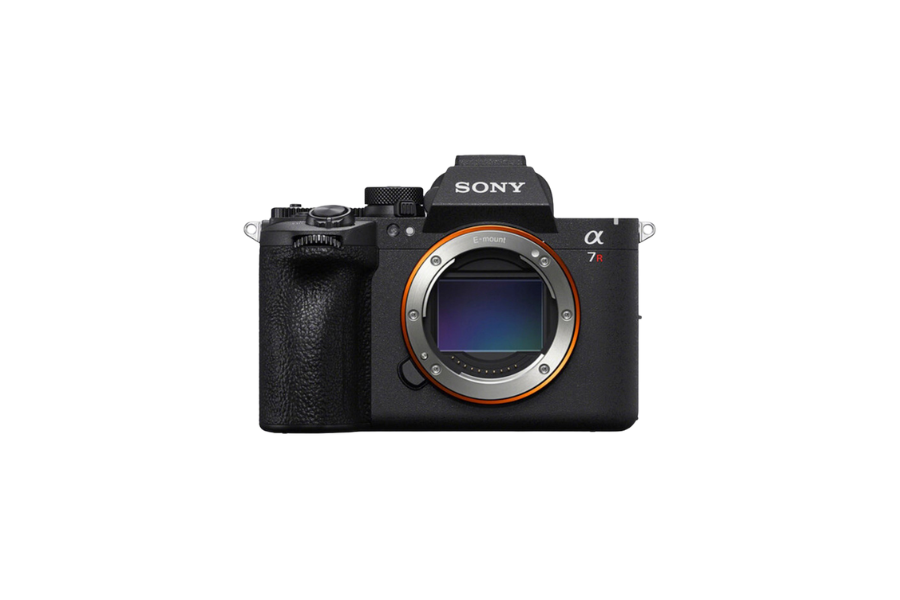
The Sony a7RVI is an impressive camera just released by Sony that is an update from an already impressive camera.
But is this the right camera for me? For you? What things does this camera’s launch perhaps telegraph about future Sony offerings.
In this post I look at why this may or may not be the next camera for photographers and filmmakers such as me who do a variety of genres including weddings, portraits, sports and commercial photography and filmmaking.
For me, the camera while impressive, is not for me. BUT what it gives me hope for in future offerings is my greatest takeaway.
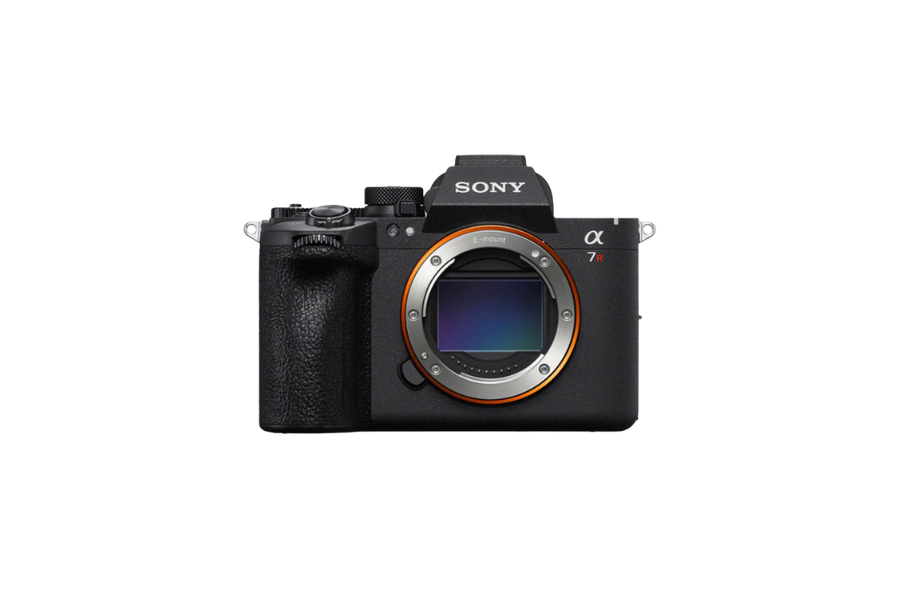
Sony’s new high resolution camera, the a7RVI, was announced today in NYC.
What Does the Sony a7RVI Mean for Photographers and Filmmakers?
Today Sony launched their new high-resolution flagship, the Sony a7RVI. At an event held in New York City, the camera was unveiled to photographers and the media for the first time.
(They also launched a new 100-400 f4.5 G Master lens which is something I am VERY interested in and will do another post on that shortly).
As a wedding and portrait photographer who also shoots sports, commercial work, and a fair amount of video, the question I keep coming back to is: is this the right camera for me?
Your needs may vary — I get that. But here are some thoughts I've worked through based on the specs, and from conversations with people who were on the ground in NYC for the launch.
To cut to the chase: will I be buying one? While I never say never, there's probably a 99% chance the answer is no.
Why I'm Passing — For Now
The a7RVI requires a new battery and a new grip, which adds cost on top of an already substantial price tag. I'm not pretending this is a permanent stance — any Sony camera moving forward will almost certainly require these new components, so it's more a matter of timing than anything else. For now, I'm content to stay in the Z-battery ecosystem. Much like when Sony transitioned from the older W batteries to the Z battery back around 2017, this is simply the direction things are heading.
The 67-megapixel file size is genuinely impressive — for the right shooter. For me, it's overkill. This is coming at a moment when both traditional hard drives and SSDs have jumped significantly in price, particularly since late last year. That means added storage costs on top of the camera's already considerable price of entry.
I already shoot a staggering number of frames — upwards of 5,000 JPEGs (not RAW — I shudder to think what RAW files would look like) at my son's baseball games alone, using an a1 and an a7V. Adding a camera that dramatically increases file sizes just doesn't make practical sense for how I work.
The cropping capability of the a1 is no slouch at 50 megapixels, and while the a7RVI's expanded dynamic range and larger pixel count would certainly help in that department, for my specific needs it represents a marginal gain — not a leap.
The AI autofocus continues to improve, as you'd expect, and that's genuinely exciting. But even when shooting sports, I find myself in a really solid place with the AF performance of the a1. Is the a7RVI's focus system better? Yes. Would it be nice to have that fancy screen on the a1? Yes. Is the difference meaningful enough for what I do day-to-day and in the foreseeable future? Honestly, not really. Again — marginal gain.
The sensor improvements are legitimately impressive. Sixteen stops of dynamic range and 8K at 30fps for video are jaw-dropping numbers. I just don't need them right now.
What This Launch Signals About Sony's Future
Here's where things get genuinely interesting — because what the a7RVI tells us about upcoming Sony cameras may matter more than the camera itself.
The Sony a1 III
The a1 remains a dream camera for sports photographers — particularly for sports involving bats, clubs, and balls — because its fully stacked sensor produces almost zero rolling shutter distortion. My 2020 a1 handles 30fps beautifully in those situations. The a7V, for all its new features and improved tilting screen, still struggles with distortion due to its shutter. From what I understand, the a7RVI shares that limitation — and honestly, that makes sense. If Sony gave this body a sensor with a fast enough readout to eliminate that problem, they'd essentially be cannibalizing their own flagship line. Something has to justify the significantly higher cost of the a1 and a1 II.
It's also likely why the a1 and a1 II sit at 50 megapixels rather than the 61 or 67 of the high-resolution bodies — pushing that kind of resolution on a fully stacked sensor at those speeds is a different engineering challenge altogether.
Will the a1 III feature a larger file size given these sensor advances? I genuinely don't know. It's possible. But it's not something I'm losing sleep over — 50 megapixels works extremely well for what I do.
What I do expect from the a1 III: all the AI upgrades we're seeing here, improved dynamic range, enhanced speed, and the new battery system. Whether it pushes beyond 30fps, I'm not sure — though perhaps Sony takes a page from the a9III playbook and adds a high-speed burst mode. A modest resolution bump, maybe to around 55 megapixels, seems plausible. But even that would be one of those quality-of-life improvements that adds more to your storage bill than to your images.
Given the timing — with the Olympics and World Cup Soccer on the horizon — I'd expect (and just guessing) that the a1 III to arrive sooner rather than later.
The FX3 II (or Whatever They Call It)
The a7RVI also has me thinking about the future of the FX3 line. The obvious upgrades would include the improved articulating screen we see on the a7RVI, the new battery system, and 32-bit float audio support.
I suspect the 12-megapixel sensor era of the a7SIII/FX3 generation may be coming to a close. A move to a larger sensor — say 24 or 30 megapixels — that downsamples from 8K to 6K or 4K seems likely, and the improvements Sony has demonstrated with higher-resolution sensors suggest noise performance could remain on par with the previous generation even at those larger file sizes.
My wish list for that camera would include: open gate recording, some form of compressed RAW in-camera, and three base ISOs instead of two — giving clean options at 800, 3200, and 12800.
The Bigger Picture
None of this is meant to rain on Sony's parade.
The a7RVI is a remarkable piece of engineering, and it signals that Sony's sensor and AI technology are advancing at a healthy pace. The quietly released XLR-A4 audio interface is also worth noting — 32-bit float audio capture is a genuine boon for event videographers who can't always control audio levels the way you might on a commercial or scripted project. And the fact that it works with existing cameras is a nice bonus.
The truth is, all the major manufacturers are making exceptional tools right now. Whatever system you shoot on, if you know what you're doing, you can produce great images and competent video.
The cameras just still don't point themselves at the subject — and they still don't know when to press the button.
Thankfully, that part hasn't changed.
Evolving a Working Wedding Videography System — insights after Video Wedding #1 this year.
On Saturday I had my first video wedding shoot (technically it was shooting for the venue but still worked it much like I would if I was shooting for the couple with some exceptions).
And, after the event, I gained quite a few insights that I want to share.
Ultimately, the goal is to find a working system of tools and methods for covering a wedding as a videographer/filmmaker. I want to make my wedding videography coverage as instinctive and as seamless as it is to do wedding photography (something I have done for a long time).
I’m trying to find what is the right fit for me and perhaps you will be able to use something from this post.
What worked:
The Sony a7sIII with the 28-70f2 was an absolute dream.
The little Amaran 25C Ace is a champ. I will add a second and will then have a very small lighting package going forward. I will add the grid and pouch on this next one ordered as well as purchase the grid for the one that I already have.
Using tripods throughout the day worked really well. I much prefer this to working with a monopod as I always feel like the monopod is going to get toppled and I never feel like I can get it truly locked off and totally motionless.
My old small Manfrotto 6 1/2 feet collapsible light stands — will throw one more in the kit.
The Zhiyun small quick release for an extension arm (a selfie stick … er, more on THAT later) as well as mounting small lights.
Using the Sony a1 as “the gimbal camera” and kept it on the Ronin RS4 Mini all day. When I needed a gimbal, it was always ready and quickly accessible. When I had a long take such as speeches, ceremony, I could either leave it on the floor using the small tripod feet (which I did since I didn’t have a third tripod) or leave it on a tripod attached with the Falcam F38. BTW if you hate gimbals, the Ronin RS4 Mini will absolutely change your mind.
Using the Falcam F38 shoulder strap clip to hold the Ronin worked superbly and means I don’t have to bring the dedicated Small Rig Strap (just another thing) to carry the gimbal.
Having two Peak Design straps (one Slide Lite and one Leash) worn bandalero style across my body are rather subdued, and a quick way to hold cameras, lenses, and even a camera on a gimbal. Plus they are very quick to change when you want to reconfigure for eye level viewing or shooting with the rear monitor. I have tried numerous straps including the Holdfast Moneymaker (very good but I felt like I couldn’t change off of the strap quickly enough) or the Spyder belt (felt like I was always going to drop a camera from my hand when using these). I needed a system that allows me to go from camera strap, to tripod, to monopod, to gimbal with a literal snap. The F38 Falcam system does just that.
What did not work :
The two small Sirui travel tripods were just a little too small. I didn’t want to leave any gear on them without being in sight for fear that they might get bumped and topple. With the a7sIII and the 28-70 f2 it puts a bit more weight on them but the fx30 and Tamron 17-70 is pretty light, though I wish it had a tripod collar as the lens makes it a bit front heavy. I am going to try a new tripod and I will see if it’s going to be “the one” going forward. Also, the video head on the tripods (a Sirui VA5 is very good but heavy and the Neewer leveling plate is also heavy making the unit bigger still and even MORE top-heavy. The new tripods coming in this week *should* eliminate this problem. We shall see. The key thing is that they have to be shorter than 20”, and less “faffing” around with adjustments as was the case using the leveling plate and the pan/tilt head.
The older Versa-flex sling bag got heavy on my walk from the venue back to the car. Even though it had a relatively light payload. I thought maybe a smaller type of sling bag to carry would be the answer, but after the walk back I know that is NOT the answer. What is the answer? Having things fit into a small Pelican roller case so it means things have to be less than 20” long to make it work. That way it will be one backpack with cameras, lenses and gear and one Pelican roller to get all the gear to the event. I don’t want a cart, I don’t want three huge “video” tripods and I don’t want to be using the aputure 60x this year.
My 24 bit audio recorder (Tascam 40x). I mean it worked, but it is a PITA to use. I have had it for years and I NEVER liked it. I find the menus still very confusing — I need to get either the new Tascam 32 bit float recorder (DR-AV2), or a Zoom F3 which is Gero proof.
A selfie stick for an extension arm on the nightstands. The good side of the Manfrotto travel stands is they work well and are small to pack, but they’re short (6 1/2 feet). I tried using a self stick as an extension arm and while it works okay, I still feel the light attached is still pushing the weight limits. Those selfie sticks are really meant for iPhones, and GoPros. So what I did a couple days earlier (and what arrived after I got home) was order an extension arm that looks like a real tripod. It’s aluminum and gives another two feet. While the Manfrotto is still not meant for really heavy lights, I think I will even be able to hold a Godox ad200 and maybe a small umbrella (probably not a big heavy soft box, though). But it will still allow me to keep the gear requirements down. This is the one, that I got. Once I saw it, I immediately ordered a second I felt like it was the perfect arm for what I need:
I need to add some fluroescent gaffers tape. While working at a really dark venue such as the Orpheum I noticed how they were using this type of tape to help make things more clear. While I had yellow gaffers on my tripods and my light stand, I still don’t think they were bright enough. And, if I need to tape the legs of the lightstand to the floor, I want to make sure that the tape is seen.
Not having a full frame lens for the Sony a1 gimbal camera. I used a 11mm f1.8 Sony E mount lens and it is good, but it means I can only use it in aps-c mode on the a1 and really can’t use it on the fx3 or a7sIII because in video mode they don’t really do aps-c (they you could use Clear Image zoom on those, but then you lose eye AF in video). The answer is something in the wide angle range — a full frame 16 1.8 is probably the best and most cost effective strategy. It’s about $798 new and can be used on Full Frame and aps-c cameras (it will crop in to approximate a 24mm focal length on APS-C). While I have thought about a 16-35 f2.8 (I used to own the GM and sold it and GMII is great and light but more than I want to spend for a lens that I don’t use a lot. I also considered the 16-25 f2.8 G but I have heard some reports of barrel distortion. The size is good and the price is good. The fast 16mm prime, however, makes the most sense as it is a focal length that I rarely use unless it is to shoot interiors, a Timelapse or a reveal with a gimbal. Plus the aps-c cropped 24mm would be helpful and useful too on the FX30 or the aps-c mode of the a1.
As nice as it was to limit myself to primarily shooting with the 28-70 and 17-17 (on the fx30, the equivalent of a 25-105), I still found myself wishing for just a bit more reach. My 70-200 was left at home and the same with the 135 — they are both great, but they add a lot of weight and take up space in a bag when trying to keep things small. Still, I think the lens that would be a perfect compliment to that 28-70 would be the 50-150 f2. Having the zoom range would be helpful. I know there’s always give and take in the photo and video world about folks using prime (fixed focal length lenses) or zooms. As the zooms have gotten spectacularly good and fast aperture, the reasons for me wanting to use primes become negated. In fact, with the exception of the 135 1.8 GM, I have no GM primes anymore. And the 135 would be sold to make room for the 50-150. Yes, I believe it’s that good and losing the 1/3 of a stop is negligible given the compositional advantages in fast moving situations.
I have to figure out a lighter solution for audio cables — they take up far too much space and weight.
On camera audio needs to get standardized. I have a ECM-B10 Sony shot gun mike and it is good and small and works simply. I also have an XLR-K3M and while it works well, it is big and draws attention. On the other camera I used a small Rode Micro. The problem with the Rode is that you have to constantly be keeping an eye on the audio, unlike the Sony which I use in auto mode. On the gimbal a1, I had no audio just taking in scratch audio from the camera’s on board. Like the Rode Micro, you have to keep an eye on audio levels especially during a musical performance.
Plan going forward:
Get 16mm f1.8 G prime lens
Get 50-150 f2 GM zoom lens (sell 135 1.8, and 70-200 f2.8 GM)
Get another Amaran Ace 25C light
Get a 32 bit float recorder (preferably one that also does timecode for future use: leaning towards the Tascam DR-AV2 or even the Zoom H1 XLR (I know many reviewers do NOT like it, but it may work just fine and is priced well (about $150).
Add 3 tripods that are quick to deploy, sturdy and will fit within a 20” case (ORDERED and TBD)
Add another extension arm to use on the 6 1/2 travel stands. (DONE)
Add a tripod collar to the Tamron 17-70 (found one! It’s the same one that I used on the 135 1.8 GM so I already had it!)
Check out the Sony ECM-M1 and the ECM-G1. The M1 is about $300 while the G1 is half the price. The M1 is probably their best little shotgun, but I would rather test and see if the G1 will do the job. I could get two for the price of one and they could become the audio gathering standard for the cameras. The other option is to not use any microphones to keep a really low (non-videographer) form factor and use some furry wind screens over the camera mikes. That’s the one thing I noticed when outside and shooting video on the gimbal a1 is that I heard wind noise. My hunch is that the G1 will be the hot set up and then I would get one for each of the cameras.
Sony Alpha Universe post on My Most Meaningful Photo of the Year
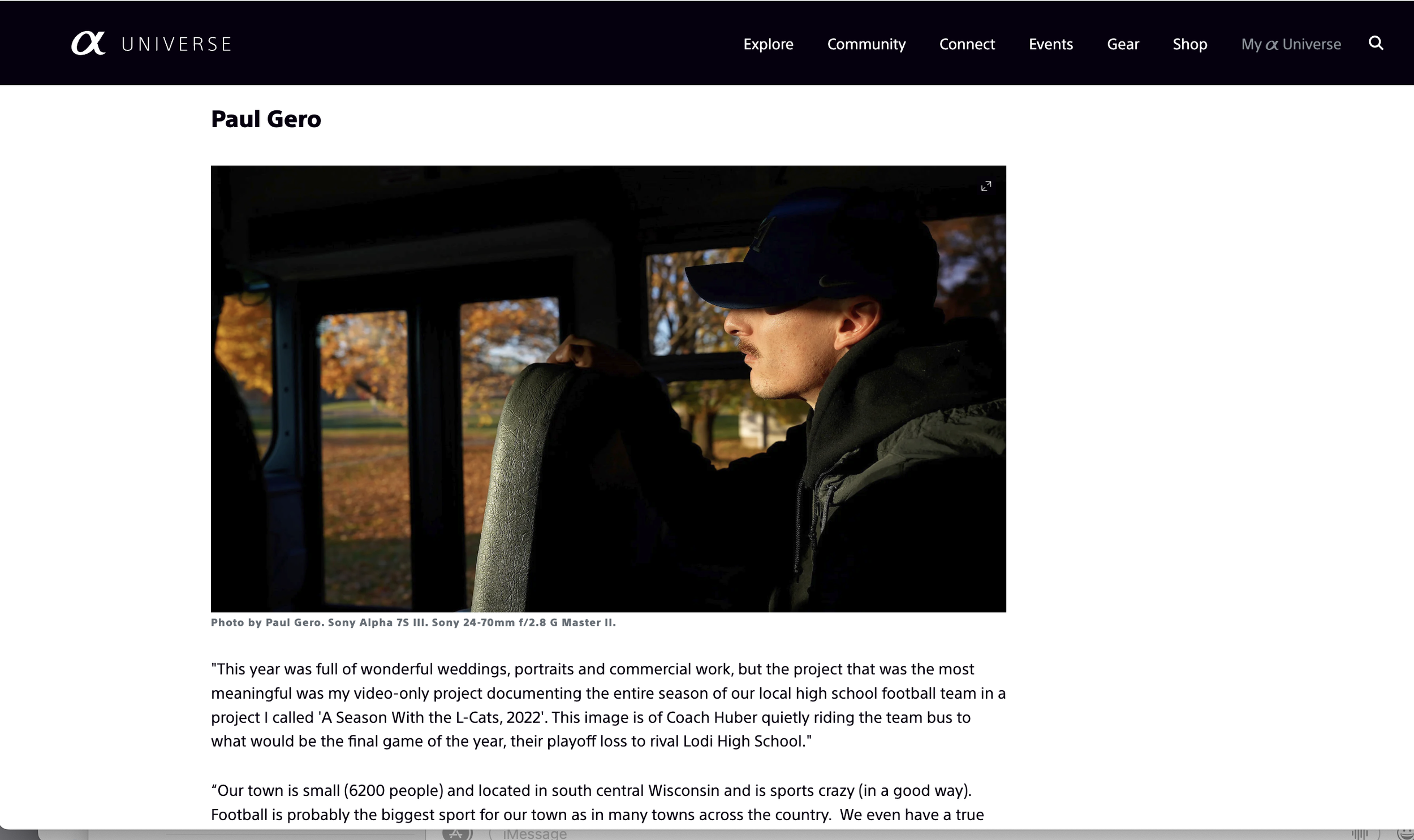
Lake Mills HS FB Coach Tyler Huber rides the bus with his team enroute to what would be their final game of the season in the third round of the playoffs against rival Lodi.
Frame grab from a Sony a7SIII with 24-70mm f2.8 GM II lens on a DJI Ronin RS3 Gimbal shot at 4K.
Here’s my longer post about the project which goes more into detail about some of the tools and techniques and distinctions that I gained from this project:
This year was full of wonderful weddings, portraits, and commercial work, but the project that was the most meaningful was my video-only project documenting the entire season of our local high school football team in a project I called “A Season With the L-Cats, 2022”.
Our town is small (6200 people) and located in south central Wisconsin and is sports crazy (in a good way) Football is probably the biggest sport for our town as in many towns across the country. We even have a true cross-town rival that is literally a walk across the street from our campus.
When head coach Tyler Huber reached out in the spring asking if I had any video from the previous season, I shared a couple of shorts that I did as little “concept videos”. They were rather raw, but he loved what he saw.
I asked if he would allow me access to document the team behind the scenes from the beginning of the season until the end and he was an enthusiastic yes. To my wife’s chagrin (she knows that she’ll be a “Friday night widow” during football season), it was a go!
I set out on this project for a few reasons:
One, I wanted to do a deep dive, BTS of the season so people could see and understand the glory as well as the pain that these kids go through. Football, I believe, is America’s game and the teamwork, camraderie and sheer brute force of the game is fascinating.
My primarily love over my career is documentary projects and particularly of sports. I have documented three previous football seasons (though primarily with still photos — two for Tesoro HS in CA and the 2019 L-Cats in our first fall back in Wisconsin) so this was my first doing all video.
Two, I wanted to fine tune and hone my video skills so that I could be as confident shooting video as I am shooting stills.
And three, I wanted to get significantly better and faster at video editing.
At the heart I believe that all photographers will become videographers if not now then some time in the future and I want to embrace what I consider to be inevitable.
I believe the project was successful on all fronts.
There were moments of great joy and sadness over the course of the season that I witnessed on the field and behind the scenes. From season-ending injuries for some players, to overcoming all odds and beating a dreaded rival at Homecoming, there was the full gamut of emotions.
As the season progressed, my shooting skills became significantly stronger, I believe. And while I’m not quite as “unconscious” (in a good way) as I am with shooting stills only, by the end of the season I found my groove and what proved to be my preferred working method.
(That method was a Sony a7SIII with a 24-70mm f2.8 GM II on a Ronin DJI RS3 gimbal with the “secret weapon”, the DJI Twist Grip Dual Handle that I supported by attaching a Peak Design Slide Lite strap (two small rig D-Ring screws were attached to the Twist Grip). The second camera was a Sony a1 handheld (on Active Stabilization) with a 70-200 f2.8 GM II with a Sony 1.4X tele extender. That gave me a bit more reach and then a fixed f4 aperture.)
For frame rates, I found that 60P worked best for me when shooting action and I preferred shooting the locker room at 24P.
I used a Rode Go II for part of the season with a small Rode Micro or Deity D4 mini attached to the camera using a Rode splitter cable. This allowed me to get a track of audio from the Rode Go transmitter and then a track of audio for the shotgun. That was on the gimbal camera.
On the a1 with the longer lens, I usually used a small shotgun microphone or, later in the season, I added the Sony ECM-B10(?) for high quality audio through the MIS hotshoe.
(I also tried a DJI Microphone over the season and found that I was having some issues with a too loud signal, which may very well have been my problem of having the gain too high on the camera. Both the Rode GO II and the DJI Mic record the audio track as well as transmit the signal so you have a back up…while not a 32 bit float recording unit, it does very well. )
The third and final goal from the project was to increase my speed, quality and confidence of editing (in Final Cut ProX).
I would guess that by the end of the season my editing time per episode was cut by 30-50% if not more. I also got better at exposure at capture plus having a better sense of what I wanted and needed for the particular episode as well as having a running catalogue in my brain about what had already been done.
Bottom line with editing, I found: Quick keys are your friend and learning the basics such as setting an in point (I) and out point (O) and then favoriting a clip (F) were critical but some less well-known quick keys such as Option-Left Bracket (to delete all the footage BEFORE the playhead on a clip) and Option - Right Bracket (to delete all the footage AFTER the playhead on a clip).
Learning those last two commands probably saved me and my wrists from the tedious task of using the blade tool, highlighting the clip, and then selecting the gap to delete.
I am extremely grateful to Tyler Huber, the head coach, as well as the rest of his coaching crew, Athletic Director Steve Considine and the school administrators who graciously allowed my presence during the season from the first day I showed up (in the rain) to the heart-break of losing to Lodi in the third round of the playoffs.
I also want to thank the players, student trainers and their parents for allowing me to document this aspect of their lives. The kids were open to the project without any hesitation and just did their thing while I did mine all through the season. I can only suspect that it had to be hard knowing I was there for the heartbreak as well as the joy, and yet they were great sports about it.
This labor of love project showed the capabilities of these Sony cameras and lenses and what can be done by a one-person crew. It was a tremendous experience and only makes me want to do more of this type of work in the future.
This image is of Coach Huber quietly riding the team bus to what would be the final game of the year, their playoff loss to rival Lodi High School.
Shot with the Sony a7SIII, 24-70mm f2.8 GM II on a DJI Ronin RS3 gimbal using PP11 (S-Cinetone).
Sony's announced the new 24-70mm f2.8 G Master II lens today....
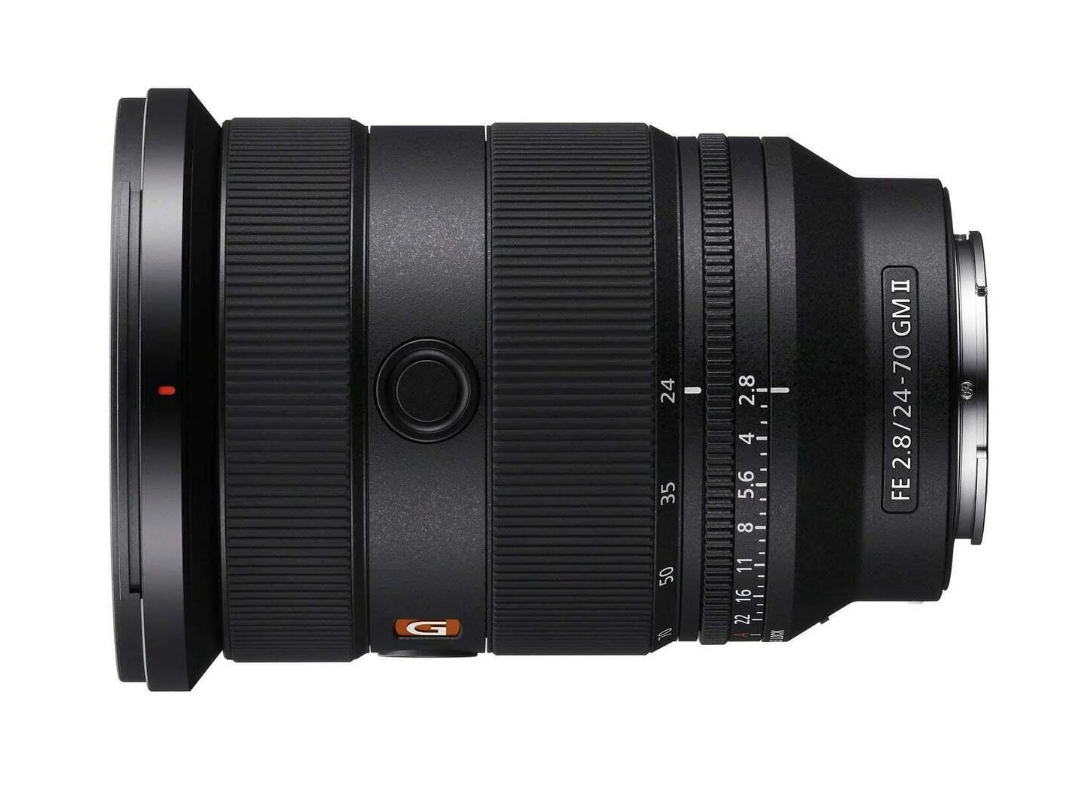
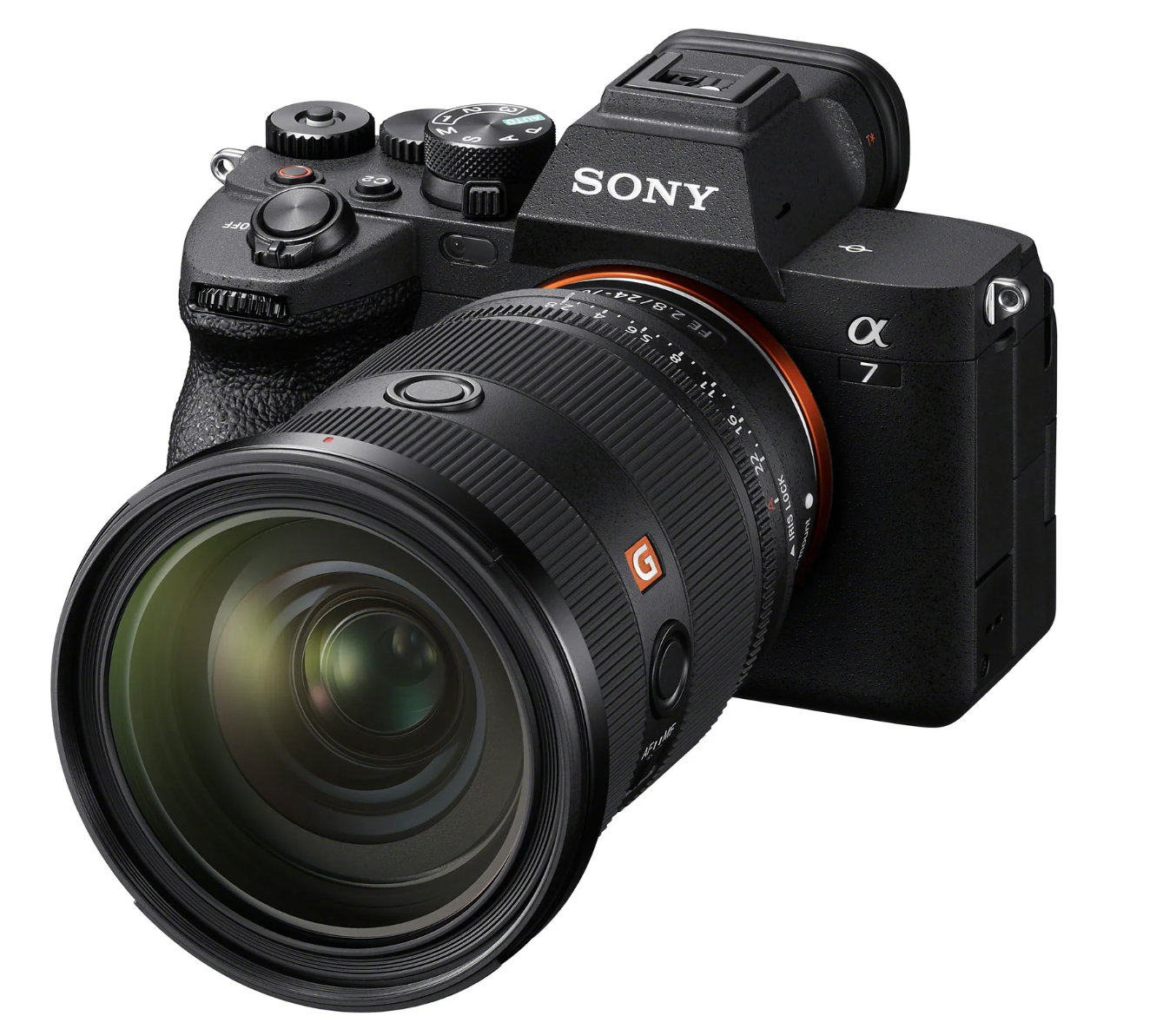
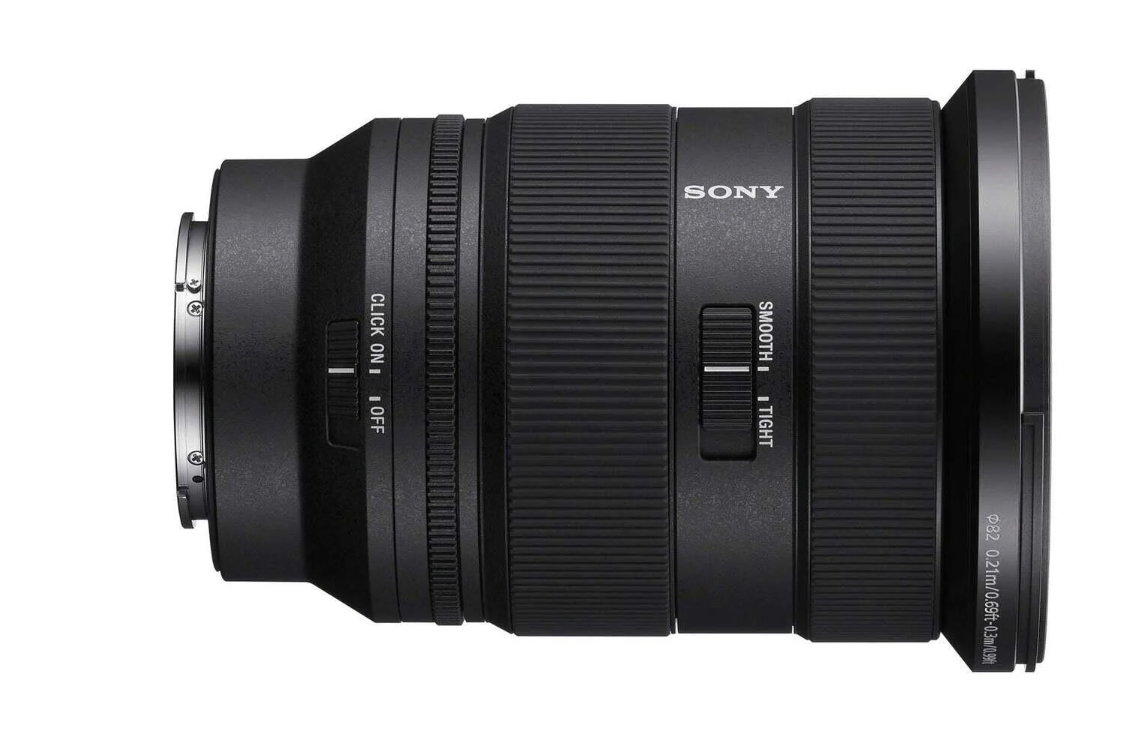
...and it is everything I had hoped it would be.
It's 22% lighter than the original 24-70 GM and this one comes in at 695 grams (1.5 pounds). The original is 18% larger and came in weighing at 1.9 pounds or 886 grams).
User reports that the lens feels more balanced and less front heavy, something that Sony has been doing since the launch of the 400 2.8 G Master which spread out the lens elements so that weight was more evenly distributed.
It's also got improved focus motors, newly added control of the zooming mechanism (Smooth and Tight)
The lens also has a mechanical aperture ring and the ability to de click the aperture like most of the recent G Master lenses have contained.
Sony reports that they have improved focus breathing in video and the breathing compensation with the Sony a7IV works so that should improve performance of these still lenses when used for video production.
All in all, it is a worthy update and one I will get. Yesterday I had a video shoot and used the a7SIII and the 16-35 2.8 GM and the 24-105 G OSS (mostly this one) on the gimbal all day.
For video I really like this 24-70, 24-105 range when using a gimbal. For me, it just works especially in fast, run-and-gun situations like a wedding or event.
If you want to see some good information on the new lens, go first to AlphaUniverse site for the overview:
Then the Matt Johnson YouTube video is very good (and he's not a real 24-70 f2.8 fan)...
I love Matt's reviews because he is a person who uses the tools for paying client work and that gives him real credibility in my eyes.
Gerald Undone does great technical reviews, and here is his:
There are more of course and you can find them at youtube https://www.youtube.com/results?search_query=sony+24-70+gm+ii
What are your thoughts on this lens? Please comment below!