
Carol Anne & Marty Saying Goodbye
Our good friends Carol Anne and Marty are moving this next week and will be leaving California, where they've lived for 9 years (and the only state their kids have lived) for Chicago -- the places where Carol Anne and Marty grew up.
It's bittersweet for us.
On the one hand we're happy that they're heading back to family and a place they really want to be. Yet we're of course sad that they'll be leaving as we are friends and our kids are friends.
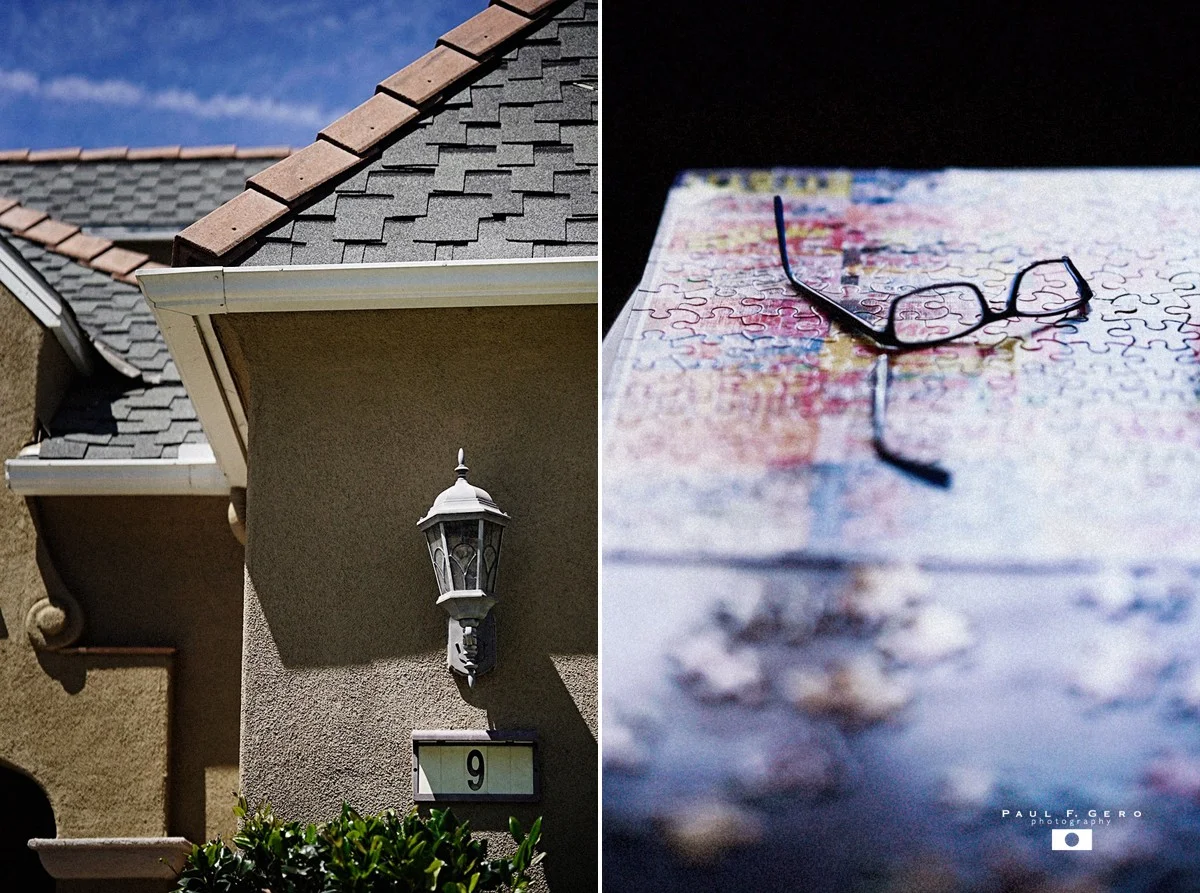
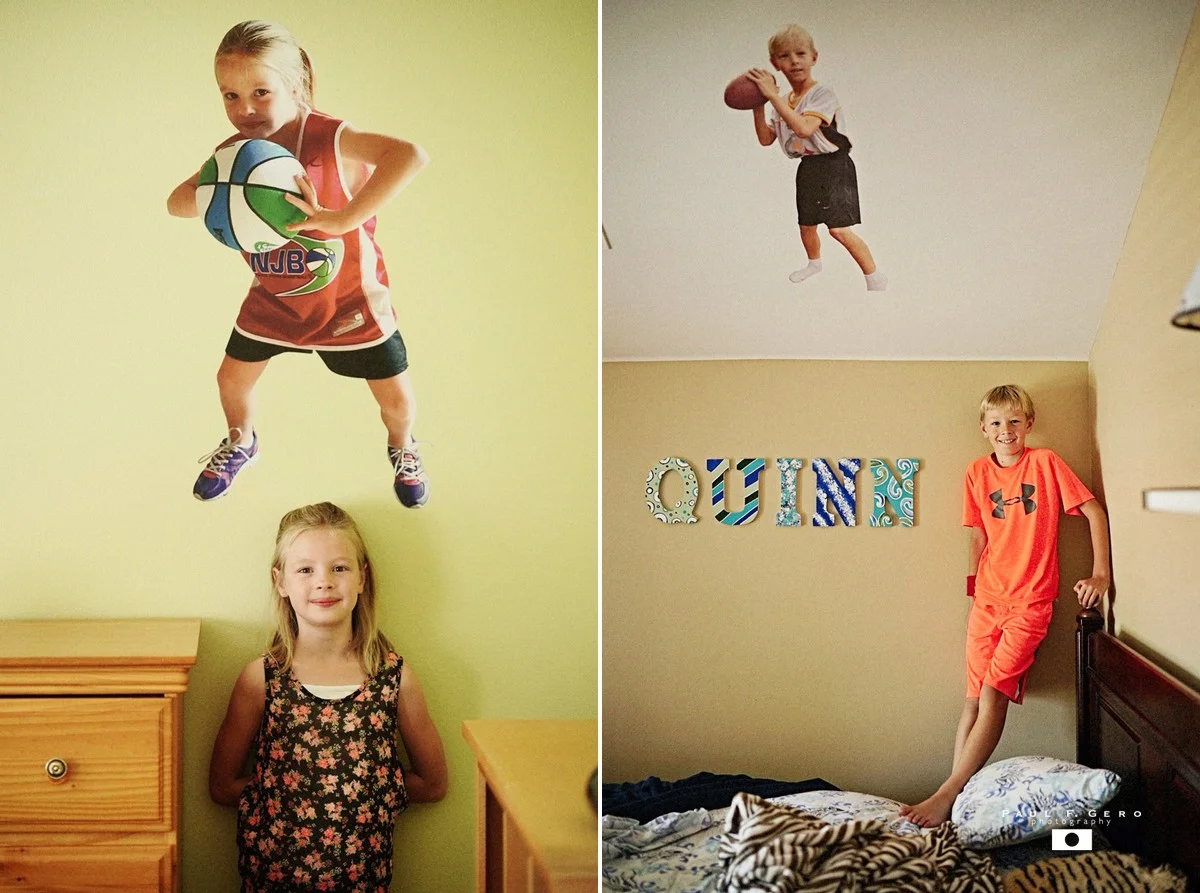
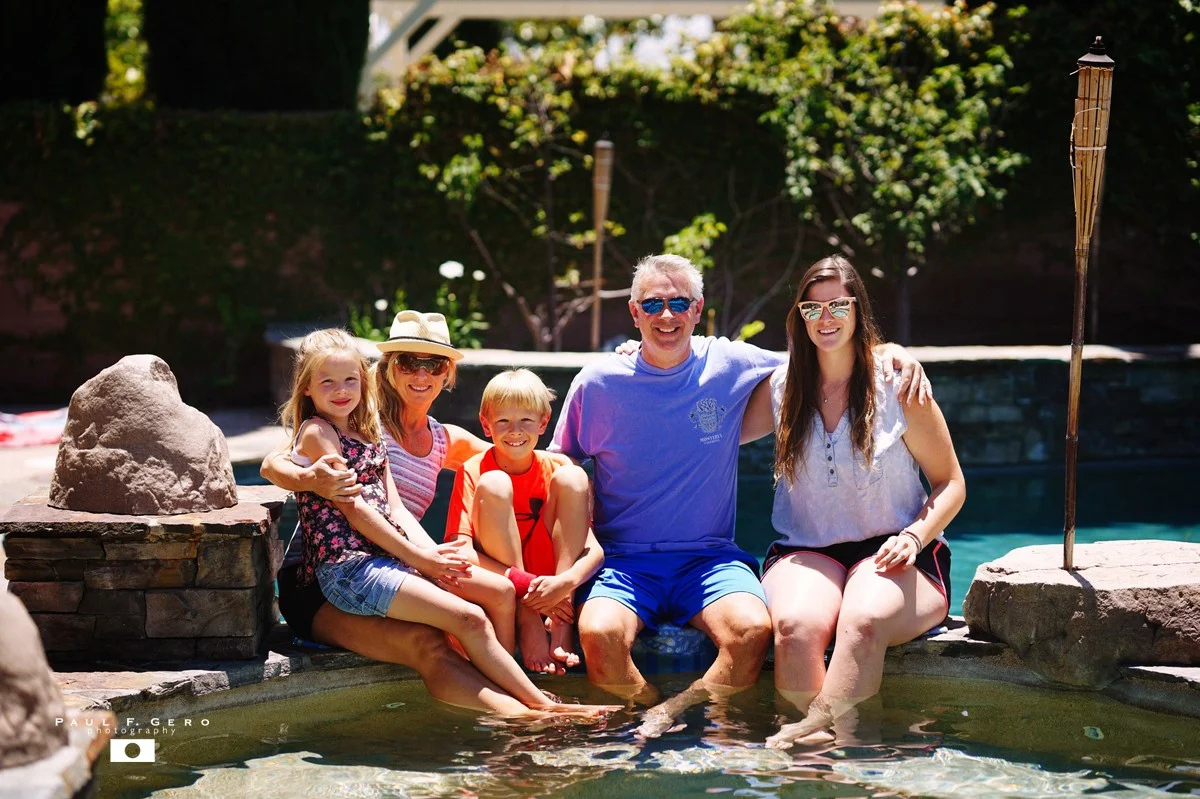
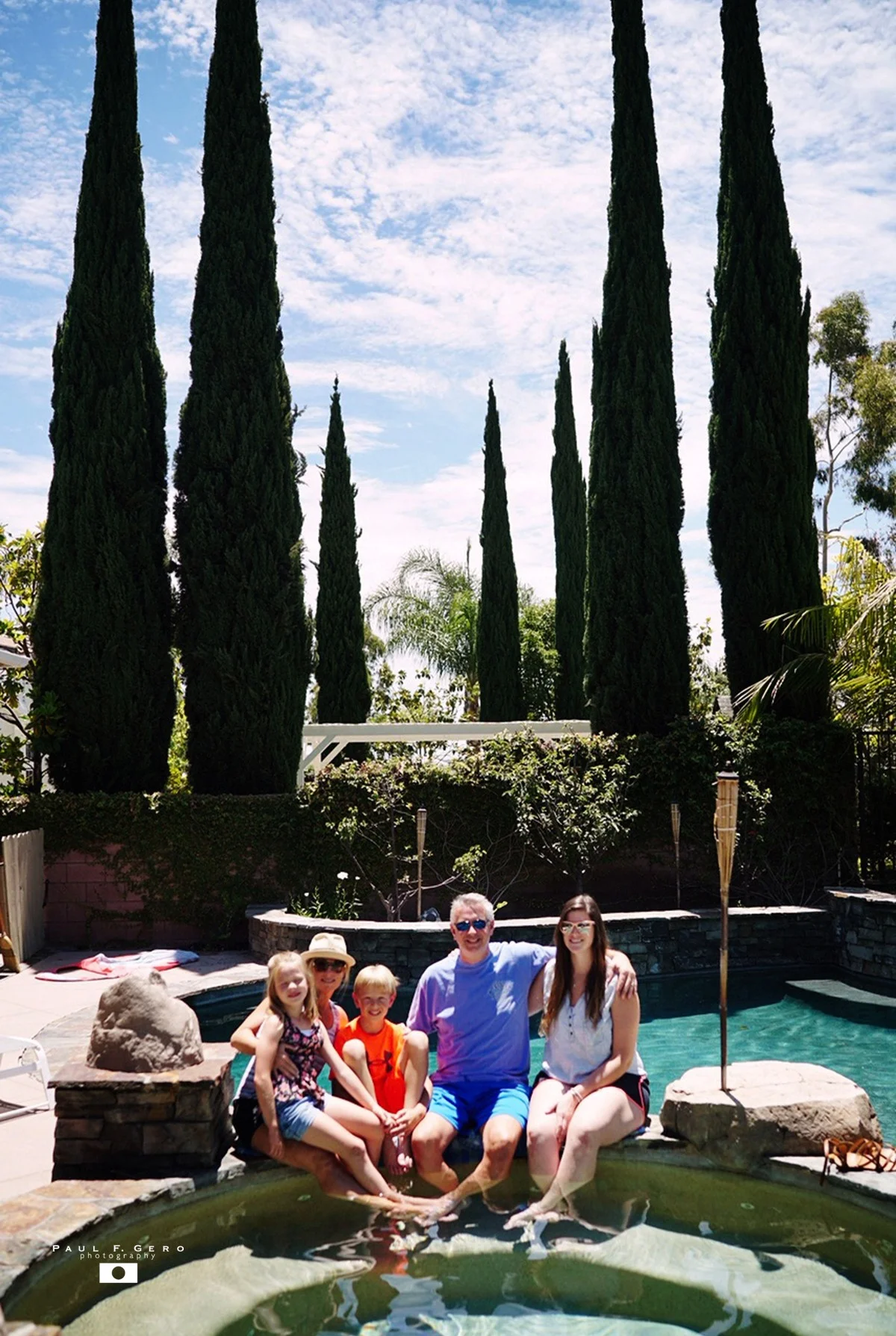
So this morning, I headed over to their home to do a very UNportrait session and produced these photographs (among others).
Travel safely you guys -- we will miss you! Our loss is Chicago's gain.
The new Godox V860II-S TTL and HSS Flash for Sony -- initial impressions video
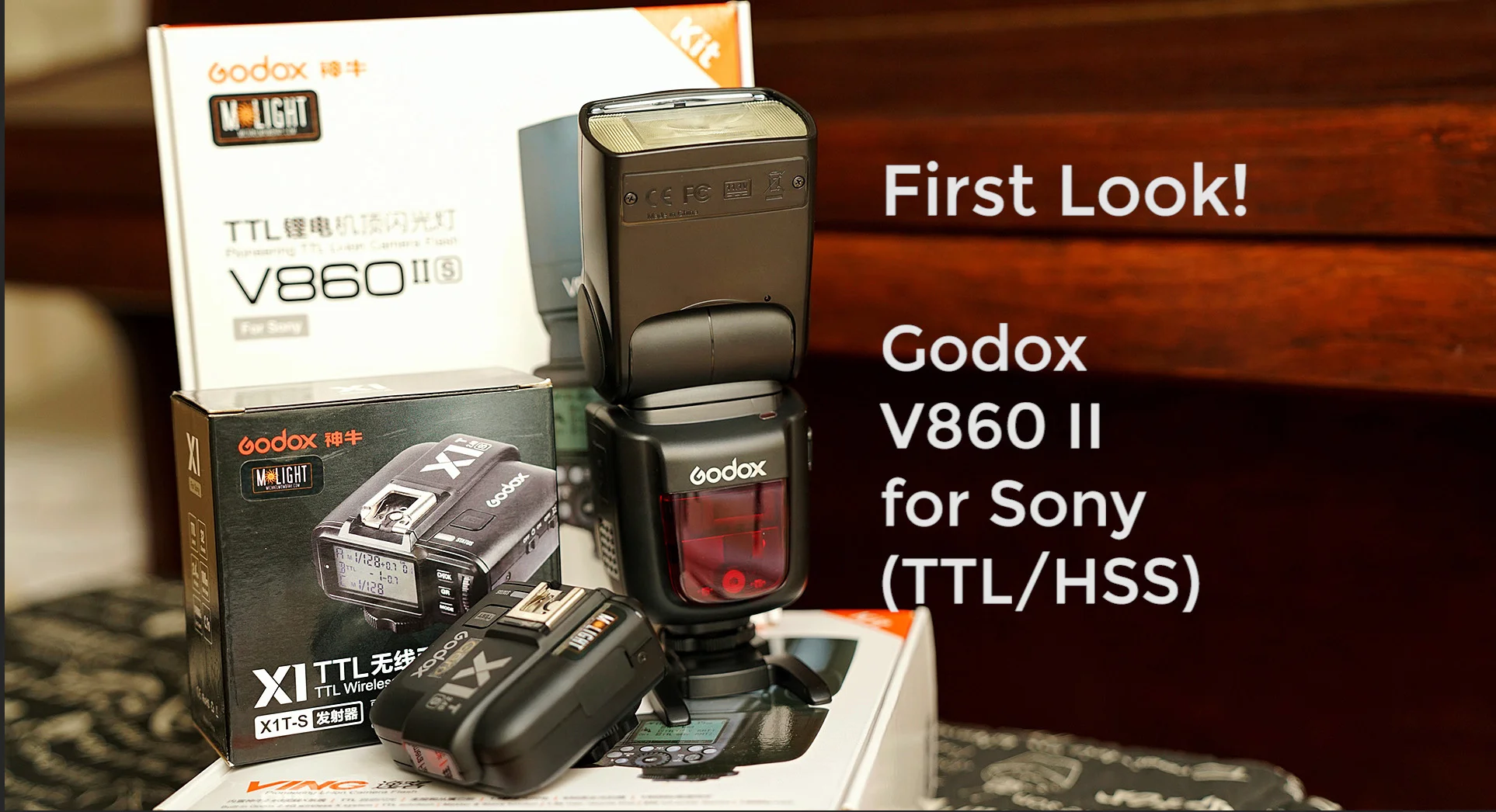
The new Godox V860 IIS (for Sony) flash is one I have been anxious to receive. Check out the video "first impressions" review that I just posted to You Tube.
One of the great benefits of being a Family & Portrait photographer...
One of the things that I really enjoy tremendously about my work as a private, personal photographer is when creating custom portraits for families is that my work becomes a focal point and centerpiece in their homes.
It's as if the homes of my clients became a private art gallery.
Recently, I had a session amidst the wildflowers of San Juan Capistrano and photographing two young sisters — one age 9 years old and another just a few days old!
It was a great session and we were able to get some fantastic portraits of both the girls outside on location late in the day when the lighting for a portrait was optimum.
Tessa, the older sibling, has been a subject of mine in previous years. So it makes it extra special to have watched her grow up in front of the camera. The earlier portraits of Tessa as a toddler and the family are displayed in their home even now all those years later.
And now with a new baby sister there’s the opportunity to do that for Helena.
Here is a gallery of images that we created for Alan and Cynthia at their OC home.
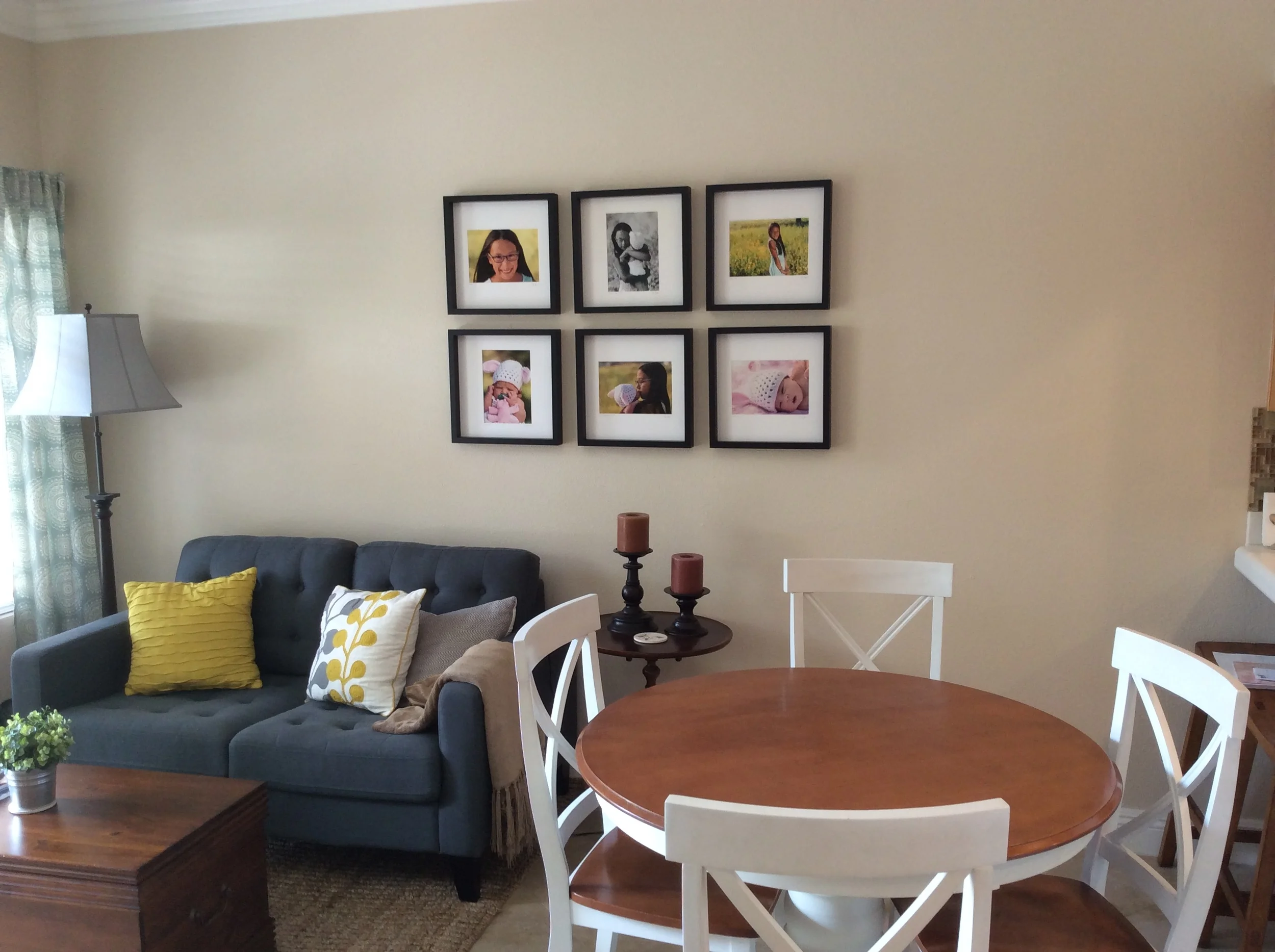
(These are our Folio Box Collection 7 x 10 portraits and the mats were upgraded to 14" x 14" size to allow for a six square portrait grid for their home.)
"Hi Paul,
The photos look beautiful, especially on our living room wall. Thanks so much!
Cynthia"
Does anything ever hold you back from taking a photograph?

A woman waits at John Wayne (SNA) Airport last Friday before a flight to Denver. In the foreground are the busts of Angels greats Jim Fregosi (left) and Nolan Ryan (right). Sony a7SII, 35mm f2.8 FE Zeiss lens, Silent shooting mode, 1000 ISO 1/80th at f2.8.
I was at John Wayne Airport on Friday morning before the sun rose, heading to a training event in Colorado.
Whenever I travel by air and I’m waiting in the airport, my mind takes me back to an article that ran in a photography magazine in the early 1980s when I was a young photographer, still in school, and hoping to make a place for myself in this industry.
The article was about a professional photographer named Burk Uzzle. He is a photographer from North Carolina who was a member of the prestigious Magnum Photo Agency at the time and also did a lot of commercial and corporate work. He photographed Woodstock in 1969, started work at a newspaper at age 17 and was the youngest photographer hired by Life Magazine.
This particular photo magazine that profiled Uzzle was one of those magazines that I wish that I still had but unfortunately I don’t (I’ve been trying to track down the exact date with no luck yet. You can find some of Burk Uzzle’s work on the NY Times Lens Blog site re: a retrospective show of his work http://lens.blogs.nytimes.com/2015/06/15/burk-uzzles-american-puzzle/ . While these aren’t the photographs that were in the article you’ll get a sense of his unique view and very intimate and graphic style (in b & w).
The profile featured photographs that he made from the airport with a camera that he always carried with him, ready to go and loaded with black and white film. (During this period in his career he was doing annual report photography all with Leica cameras to travel light and lean as he traveled the globe doing the travel. Two Leica cameras were his color cameras and one Leica with black and white for his personal work).
The photographs were haunting in their composition and they were wide angle so they showed people within the landscape. Some close, some wide. The light was often early light or end of the day light captured in those off moments that happened when he was traveling from assignment to assignment.
The beauty of those Leica cameras is that they are so small and lightweight (not intimidating) as well as very quiet.
Since I’m now shooting with Sony digital cameras, I’ve tried to replicate that small form factor and low key photographer demeanor by using my cameras in a similar type of "rangefinder" way.
On this day my easy access travel camera was a Sony a7S II and a tiny 35mm f2.8 FE Zeiss lens. Very small and jewel like, it doesn’t look particularly intimidating.
And yet, despite this stealthy little camera in my possession, when I saw a scene that struck me as interesting and a scene that I simply had to photograph, I hesitated taking the photograph!
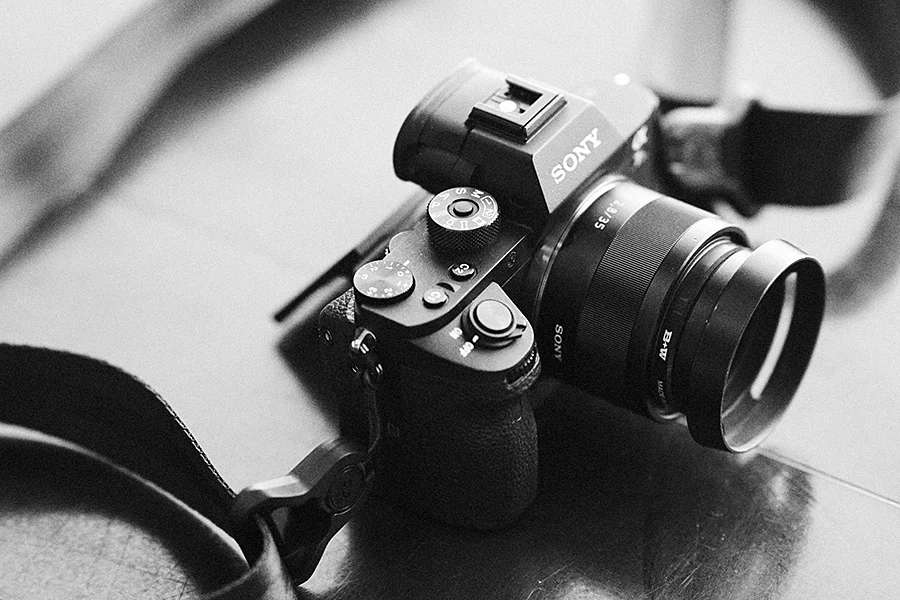
This is the small camera used to make the photograph above -- a Sony a7SII, 35mm f2.8 FE Zeiss.
Fighting “The Resistance"
The scene happened when I was in line to board and I casually glanced to my right and saw an older woman with a soft drink, seated on a bench. Her body language said “tired” which I totally understood (after all it was around 6:15 AM and we were waiting to board a plane).
So I noticed her body language, but what made it more interesting, and maybe a bit haunting was the fact that she was flanked by the sculpture busts of two great and former Angels baseball players from the late 60s and 70s — Jim Fregosi and Nolan Rolan.
They were housed in a display case where they appeared to float and the cases were angled, sending a diagonal line toward the camera.
This was a photograph that instantly brought me back to that article and also brought me back to why I love photography so much.
It’s that element of surprise — even for a photographer, who’s really expecting to see something at this godforsaken hour of the morning on a Friday at an airport? But it’s also a reward for being ready, even in a kind of casual, ready-for-a-photo way.
And still, I have to admit I turned and saw it and then I held off taking the photograph!
Would this woman see me? Would she mind? Would other passengers see me? Would they mind? Would anyone say anything? Can you do this kind of photography in a post 911 world?
Those ideas flashed through my mind in an instant and kept me frozen, not making a photograph.
I turned and looked again and the feeling gnawed at me.
That’s a photograph that I want to remember. I want to remember that feeling, I want to remember this moment in time, I want to honor that artistic instinct in me that sees something and then takes it — not in a big footing “I’m a photographer I have a right to take a photograph” jerk mentality but instead, the "Wow, that is amazing, it speaks about life, it’s real, it’s beautiful and I really want to remember it” kind of way.
So despite the hesitation (yep, even after doing this for decades, that resistance still wells up) I got the camera out and prepared to make a photograph.
In this case I would go into the quiet camera mode. Silent shooting on the a7SII and then I flipped the view screen down so I could see through the lens without bringing the camera to my eye. I framed, focused (using my thumb on the back button) and made several exposures. I checked the images by looking through the EVF. There was one in there that I really liked.
Another thing that I observed while working this way was that I wasn’t noticed. Well, not at least in a way that calls attention to itself.
In a way it was as I was invisible. I have found that holding the camera away from my eye and stretching it out a bit, makes it seem less intimidating. Old school medium format cameras are similar when they have a waist level finder so you are looking down to focus. Simply keeping the camera AWAY from my eye made it seem like I was an amateur or not even making a photograph.
And, the quite mode on the Sony meant that camera shutter is not even heard. Even quieter than a Leica when in this mode!
The lesson in this for me was to continue to be ready to make a photograph -- to continue to look and see and feel and be open to discovering a photograph.
How about you? Have you ever hesitated in taking a photograph? What held you back? Did you overcome any fears? What’s your story (please share it below in the comments).
What is your "Essential" Portrait Kit? Here is mine from my Sunday portrait (and why I chose it)....
This past Sunday I had a portrait session with a previous client and I have been trying to get my gear for a portrait down to the essentials.
It’s easy, especially when working with an assistant, to just throw everything at the job, but it means you end up carrying around gear that might not get used. If you’re hiking around a lot, it can be a burden and just a lot more stuff to carry.
It made me wonder: “What is the minimum amount of gear that I can bring and feel like I’ve got everything I need?
Different photographers will have different needs, that is for certain.
My friend Jonathan Canlas, a film shooter (and medium format shooter to boot), shoots virtually everything with a normal focal length.
If you watch a video of him doing a shoot, notice that he only shoots the entire session with ONE lens (the 105 f2.4 on his Pentax camera; the 80mm on his Rolleiflex -- both are "normal" lenses). Pretty darn cool. (Click the link)
While I LOVE to shoot a portrait with just one lens, I do like to have a bit of flexibility. (Notice that Jonathan shoots with primarily one lens he also has a backup camera and a b & w camera too -- so he's got things covered).
Much of what I shoot with is the 55 or normal lens for my Sony, but there are times when I need more.
At Sunday's shoot I was trying an experiment to see if I can pare my kit down to the most essential for me.
Here’s what I brought for cameras and lenses:
Sony a7R II (Full Frame)
Sony a6300 (APS-C sensor with a 1.5X crop)
35mm f1.4 FE Zeiss
55mm f1.8 FE Zeiss
50mm f1.4 ZE Zeiss (Canon EF mount with Fotodiox Pro adapter)
85mm f1.8 Zeiss Batis lens
Think Tank Retrospective 7 to carry the extra gear including CF cards and 4 extra batteries.
Normally I would bring one or all three of my zooms but today I wasn’t feeling them. If I had to bring just one for portraits, it would most likely be the 70-200.
Still, with the cameras I have, I knew it will be fine because the a6300 will give me about a 135mm focal length equivalent (actually 127.5mm) when I put the 85mm Batis on it…but then I’ve got the full frame which gives me a bit more variety.
Prior to converting to Sony mirrorless nearly two years ago, with my previous DSLR system I would often shoot a portrait session with a 50 and a 135 so I will start today’s session with the 55 and the 85 on the a6300 (about a 135mm) and change as needed.
Here’s what I brought for lighting (I brought it and did not even use it -- and that's ok):
Dyna-lite Baja B4 (400 w/s monobloc. Like a Profoto B1 without TTL and HSS and also about $1400 cheaper. Weight though is about 6.1 pounds so it's not light, but it is self contained (battery is in the head) and the big bare tube shaped flash creates a wonderful quality of light.
Pocket Wizard to trigger flash; Dynalite remote for Baja to adjust power from camera position.
Manfrotto 12 foot light stand. I wish I could use something lighter but because the flash and the modifier can be close to 7.5 pounds, I need to have a pretty substantial light stand to hold it securely. Using a sandbag could be helpful but I sure don't want me or an assistant to carry it as we walk around the park. He was going to be "on the stand" so that alleviated some concerns. (TIP: Plus, I instructed my assistant to lower the flash and modifier on the stand to the lowest part and then loosen the top lever that would allow the flash head to spin if it were to catch a gust of wind.)
GoMo Box - 36" Octabox. My new favorite, go-to lighting modifiers. These are made by Godox and private labeled by Wisconsin portrait photographer Michael Mowbray. The one I used is priced at $149 plus shipping. A fantastic light that is solid and secure and creates a wonderful quality of light on the faces of subjects. Since I have had these lights I have not used my rectangular softboxes that used to be my go-to light sources. The mount on the box is Bowens which is the most ubiquitous of all light modifiers and what the Baja accepts. And, it's really easy to find softboxes, snoots, grid holders, etc. for very reasonable prices.
To save $20 on any GoMoBox use the code 20GOMOPG at checkout. This is an affiliate offer.
43” Neewer 5-in-1 triangular modifer. (Click here to see on Amazon)
At first I was going to only bring one (again the goal was *trying* to be lighter, but seeing how quickly the light was popping in and out (it had been very overcast most of the day (part of “May Gray” here in SoCal) but was starting to clear.
I know from previous experience that this can be problematic if you only have one modifier and it has to be changed (a PITA if you are trying to do it fast…So with a bit of a sigh I resigned myself to bringing the three reflectors and all was good.
Versaflex 36 inch padded bag. This is probably the most well-made “sling” bag that I have seen and is made by the good folks at Versaflex in Cleveland. This will hold everything -- lightstand, Baja 400, GoMox modifier.
In the Think Tank bag, I'll carry my extra lenses, batteries and cards and the triggers so they don't get damaged if bumped in the bag. (Click on Versaflex in bold to go to their site).
The results:
The portrait session went well. It was the first time using a new assistant, Hunter and he did well. He came to the studio about 45 minutes early and we went over the tools I was bringing, the why and then talked about some of the strategy and the way I work a portrait session.
He did very well and had a great personality with the subjects and their parents (THAT is HUGE).
On this shoot since the light was coming in and out, the only tools we used for all the portraits were the reflectors. I went from silver to white — not enough direct sun to use the diffusion — so it was strictly a reflector kind of day. And in retrospect I was VERY glad that I brought my usual three reflectors (one set for white, one set for silver and another for diffusion — as needed). No need to use the strobe, but we had it in case we needed it.
My goal is to make the light look great, look natural, make it easy for my subjects and the result is a better looking portrait and a more cinematic feel to it (using the natural light as the hair light, kicker or backlight — the reflector to add some fill and shape on the face in the foreground).
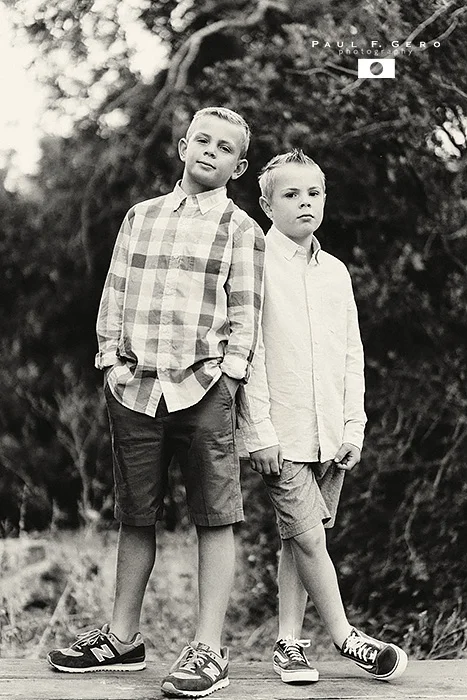
Portrait of Keegan and Logan | 2016. Sony a7R II, 85mm f1.8 Zeiss Batis lens, 400 ISO 1/2500th at f1.8.
The cameras and the lenses worked very well. Didn’t feel any need for anything longer. And, having the different sized sensors gave me a distinctly different look.
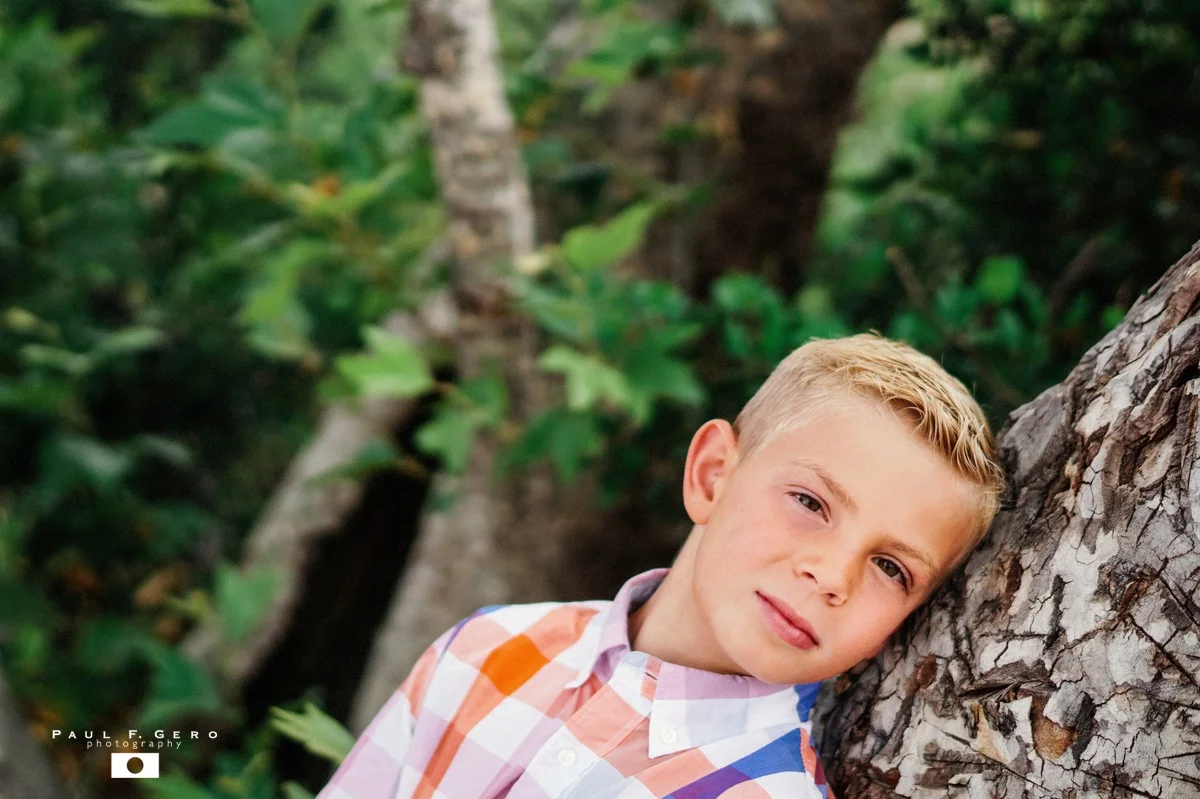
Portrait of Keegan | 2016. This portrait was made with the Sony a6300 and the 35mm f1.4 FE Zeiss lens. 1/2500th at f1.4, 250 ISO.
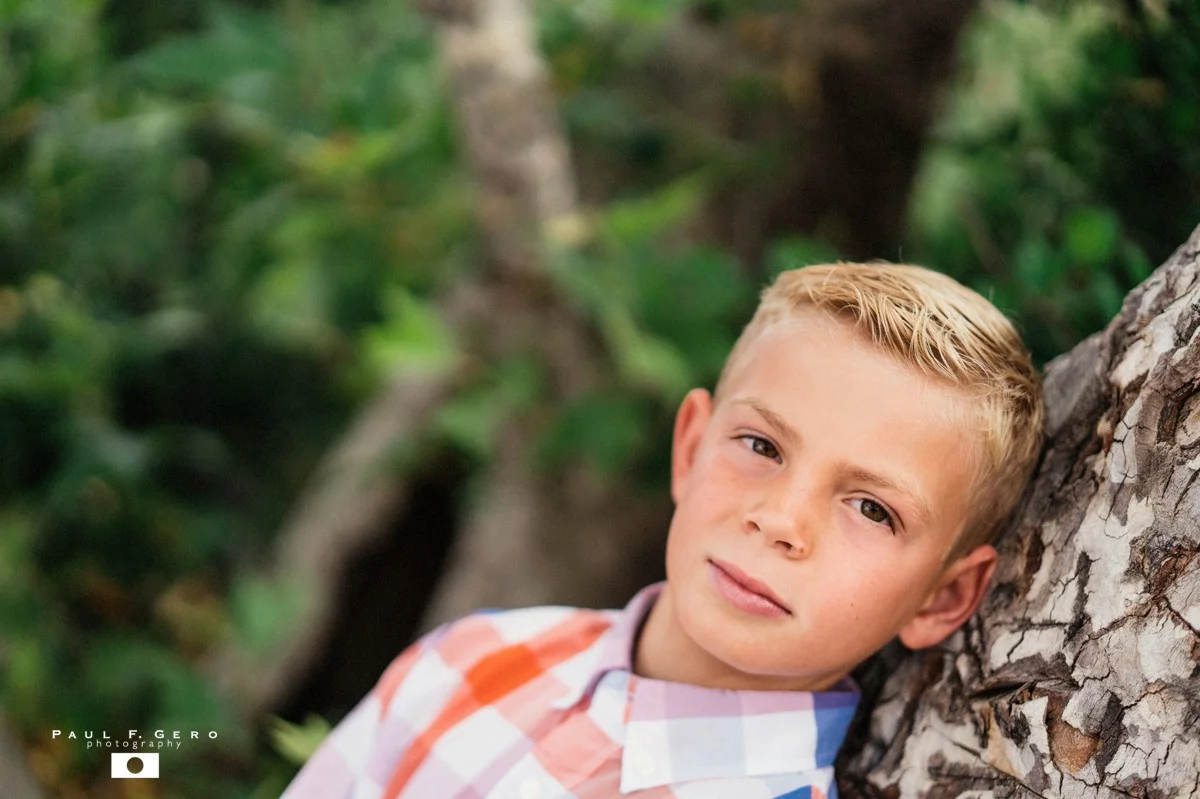
Portrait of Keegan | 2016. This portrait was made with the Sony a7RII and the 55mm f1.8 FE Zeiss lens. 1/2000th at f1.8, 400 ISO. While both of these are "normal lenses" for their respective sensor size there is a difference in the look and feel. One is not necessarily better or worse than the other, but it is a different look. A reflector was used off camera for fill for both.
There’s a difference to the look between aps-c and FF and that’s okay. I actually like the differences as it gives me choices. Filmmakers will probably be more at home with the framing on APS-C as it more closely approximates Super 35mm frame lines but us still shooters probably are more used to the FF look. Whatever works — they will both do the job.
Though I have to admit I still tend to prefer FF all that being said.
The goals of this session were to tighten things up, to simplify and it was successful and the photographs were fun and easy and was just a joy to work with these two (I hadn’t photographed them in a few years — they’ve grown up a ton since then).
So that's my story from my Sunday evening portrait. Please let me know in the comments what YOUR essential portrait kit is!